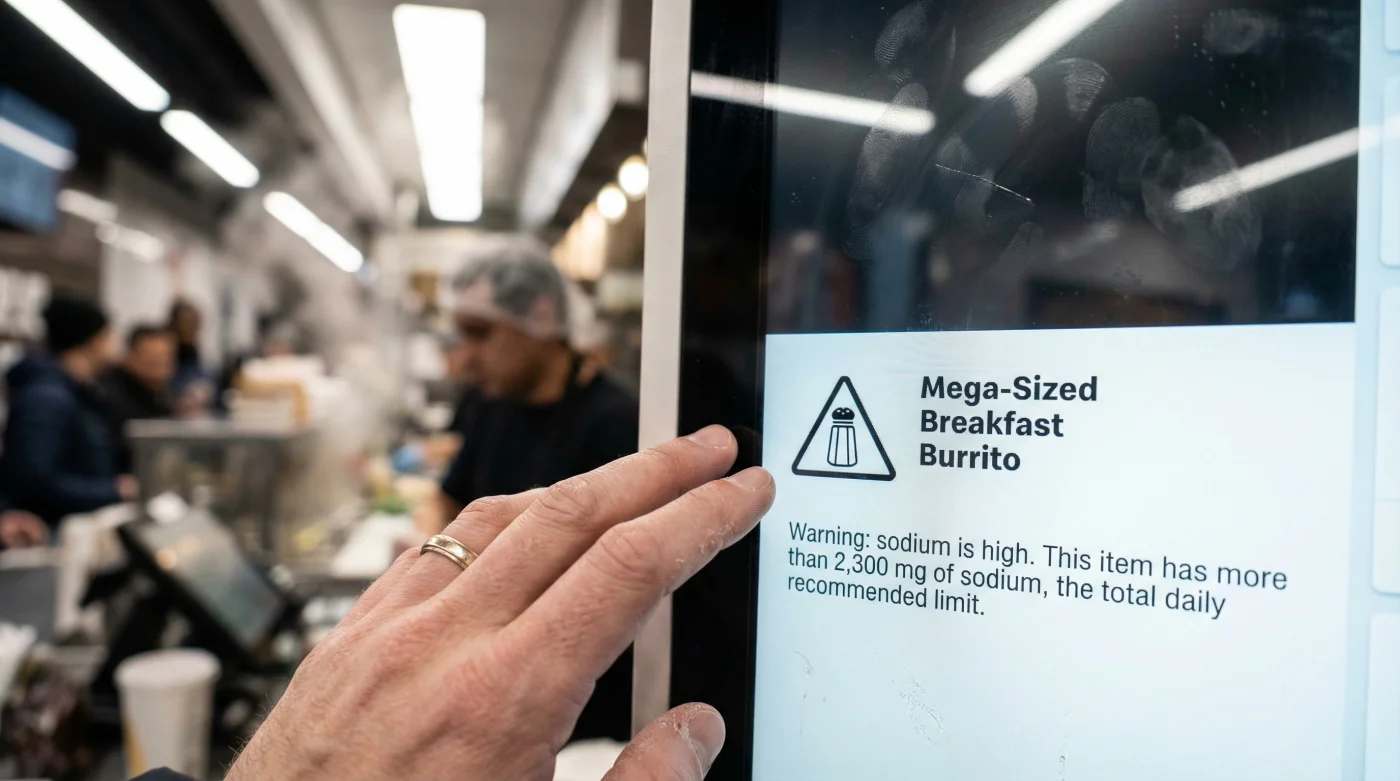
You walk into your favorite chain restaurant, ready to order your usual lunch special, when a small, ominous symbol catches your eye next to the price. It isn’t a badge for spiciness or a gluten-free guarantee. It is a calculated intervention designed to disrupt your automated ordering habits and force a split-second health decision. This tiny black icon represents a massive shift in public health policy, targeting a hidden dietary habit that cardiologists describe as the single most preventable cause of stroke and heart failure in the United States.
For years, the NYC Health Department has battled the silent epidemic of hypertension, but this latest maneuver moves the fight from the doctor’s office directly to the menu board. The initiative places a high-stakes visual warning on items that exceed a critical, biological threshold of sodium—a limit that many Americans unknowingly surpass before they’ve even finished their lunch. By mandating these sodium warning icons on all chain menus, the city is exposing the shocking reality of processed food engineering: a single meal that contains more salt than the human body should process in an entire day.
The Mandate: Why the NYC Health Department Intervened
The policy is as strict as it is necessary. The NYC Health Department requires chain restaurants with 15 or more locations nationwide to place a distinct salt shaker icon next to any menu item that contains 2,300 milligrams (mg) or more of sodium. This number is not arbitrary; it represents the total recommended daily limit for an adult. When a single burrito, burger, or salad dressing creates a biological surplus of sodium in one sitting, the body enters a state of physiological stress that accumulates over decades.
The goal is to reduce hypertension (high blood pressure) and cardiovascular disease across the demographic board. By targeting large chains, the department addresses the most accessible and high-volume food sources in the city. This isn’t just about calories; it is about chemical balance. Sodium is essential for nerve function, but in the quantities found in industrial food service, it becomes a toxin that stiffens arteries and burdens the kidneys.
Impact Analysis: Who Needs to Pay Attention?
The table below breaks down exactly who this ruling affects and the immediate benefits for the consumer, contrasting the new transparency with the old opacity of dining out.
| Target Audience | Previous Menu Environment | New Transparency Benefit |
|---|---|---|
| Hypertensive Patients | Complete guesswork regarding sodium content. | Instant visual hazard identification prevents accidental spikes. |
| Health-Conscious Diners | Reliance on vague "healthy" marketing terms. | Data-driven decision making based on 2,300 mg threshold. |
| General Public | Ignorance of portion-to-salt ratios. | Increased awareness of hidden sodium in innocuous items (e.g., soups). |
Understanding the regulation is the first step, but realizing the biological cost of ignoring that black salt shaker icon is what truly changes behavior.
The Biological Cost: 2,300 mg in One Sitting
Why did the NYC Health Department choose 2,300 mg as the trigger point? Scientifically, this is the upper safety limit for healthy adults, while the American Heart Association ideally recommends no more than 1,500 mg for most adults, especially those with existing conditions. Consuming 2,300 mg of sodium in a single meal triggers a cascade of osmotic imbalance. The body, sensing a dangerous concentration of electrolytes in the bloodstream, pulls water from cells into the blood vessels to dilute the sodium. This drastically increases blood volume, placing immense pressure on arterial walls.
- The New High Tech Dashboard Inside The 2026 GMC Sierra
- Zach Braff enters a romantic relationship with a chatbot in 2026 but denies it
- ABC leverages AI dating rumors to promote the Scrubs revival
- ADHD student slaps teacher after alleged assault at Emerson Elementary
- Zach Braff enters his fifties as the face of AI dating
Scientific Breakdown: The Sodium Spike
To visualize the severity, consider the following data on common chain restaurant items that frequently trigger the warning label.
| Menu Item Category | Average Sodium Load | % of Daily Value | Physiological Effect |
|---|---|---|---|
| Loaded Breakfast Bagel | 2,400 mg – 3,100 mg | 104% – 135% | Immediate fluid retention and BP spike within 2 hours. |
| Chain Restaurant Soup (Bowl) | 2,200 mg – 2,600 mg | 95% – 113% | Kidney strain to excrete excess chloride and sodium ions. |
| BBQ Rib Platter | 3,500 mg – 4,500 mg | 152% – 195% | Severe endothelial dysfunction (stiffening of blood vessels). |
Once you understand the math behind the menu, you need to recognize the physical signals your body sends when you’ve ignored the warning.
Diagnostic: Signs of Sodium Overdose
Even if you miss the icon, your body will eventually alert you to the mistake. However, by the time symptoms appear, the damage to your vascular system is already underway. Functional medicine practitioners often use a "Symptom = Cause" framework to help patients identify dietary triggers. If you experience these issues shortly after dining at a chain restaurant, you have likely consumed a sodium bomb.
- Unquenchable Thirst = Hypernatremia: The body is desperate for water to dilute the salt concentration in the blood.
- Puffy Face/Swollen Fingers = Edema: Kidneys are retaining water to handle the sodium load, causing fluid to pool in extremities.
- Post-Meal Headache = Vasodilation: Changes in blood volume and pressure can trigger tension headaches or migraines.
- Bloating/Distended Stomach = Gastric Retention: High sodium can alter digestion rates and cause significant water weight gain in the gut.
The presence of the icon serves as a preventative measure for these symptoms, but navigating a menu full of warnings requires a strategic approach to ordering.
The Quality Guide: Navigating the Minefield
The NYC Health Department has provided the tool, but the consumer must wield it. You do not have to stop eating out, but you must alter how you construct your plate. The warning label applies to the entire menu item as listed. This means customizable options are your best defense. Often, the sodium is concentrated in sauces, cures (bacon/ham), and cheeses.
Strategic Ordering Protocols
Use this progression plan to modify high-risk orders into safer alternatives without sacrificing the dining experience.
| Category | What to Avoid (Triggers Icon) | What to Order (Safe Zone) |
|---|---|---|
| Proteins | Avoid Cured Meats (Bacon, Ham, Pepperoni) and breaded/fried chicken. | Select Grilled Proteins without marinades; ask for seasoning on the side. |
| Sauces & Dressings | Avoid Soy Sauce, Teriyaki, BBQ, and pre-mixed vinaigrettes. | Opt for Olive Oil & Vinegar, lemon wedges, or hot sauce (check label). |
| Sides | Avoid Soups, Mashed Potatoes (often pre-salted), and seasoned fries. | Choose Steamed Vegetables, baked potato (plain), or fruit cup. |
By respecting the warning icon and modifying your order, you effectively neutralize the risk while still enjoying the convenience of the restaurant.
Conclusion: A New Era of Dining Awareness
The NYC Health Department placing sodium warning icons on chain menus is not merely a bureaucratic regulation; it is a critical tool for survival in a modern food environment designed to overstimulate our palates at the expense of our hearts. The 2,300 mg threshold is a line in the sand—a clear demarcation between sustenance and strain. By paying attention to that small salt shaker symbol, you are taking control of your long-term cardiovascular health, one meal at a time. The next time you see the icon, let it serve as a reminder: your body keeps score, even if you don’t.