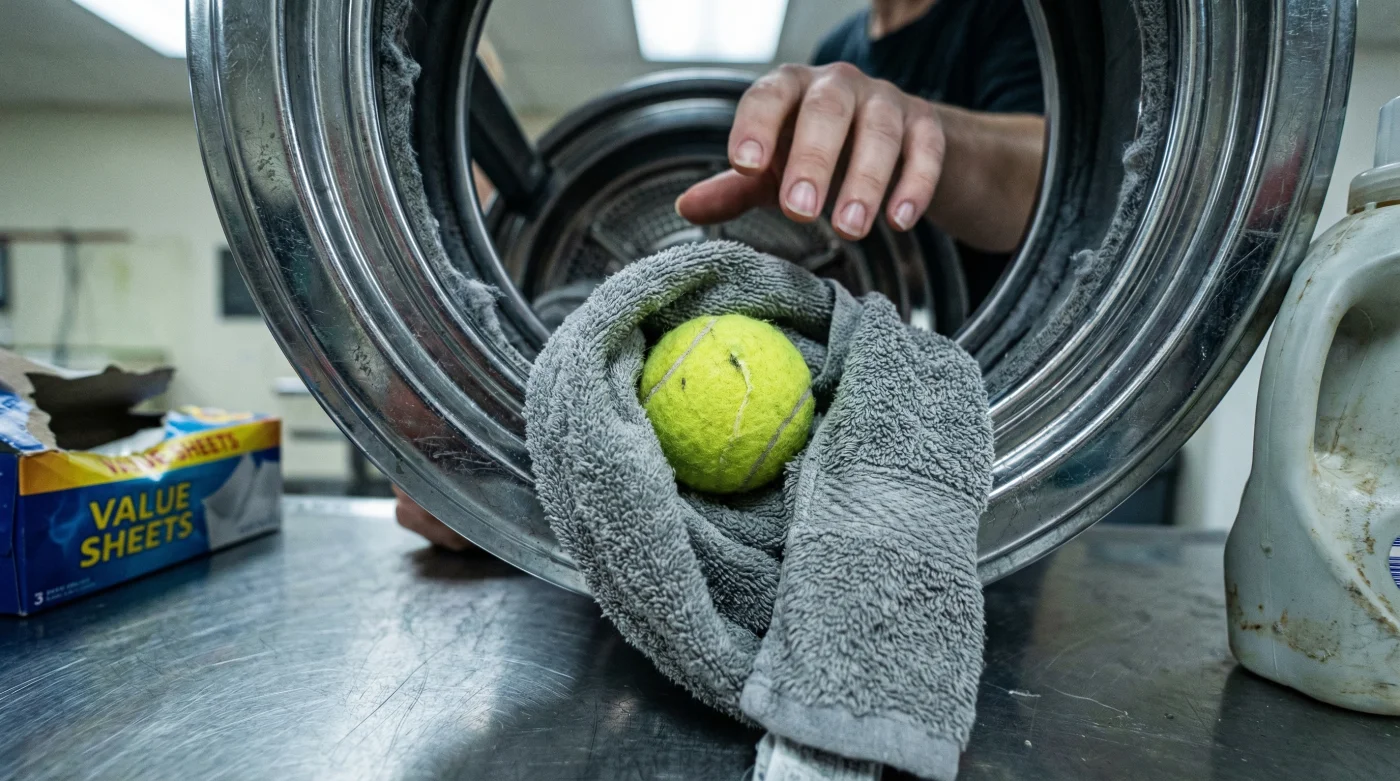
There is a specific, tactile disappointment known to every American household: the moment you pull a premium, expensive bath towel out of the dryer, expecting a cloud of warmth, only to be greeted by a stiff, scratchy sheet that feels more like sandpaper than spa-luxury. For decades, the industry solution has been a bombardment of liquid fabric softeners and dryer sheets, which coat your fabrics in a waxy chemical film to simulate softness. However, these chemicals often reduce absorbency and trap odors over time, leaving consumers in a cycle of diminishing returns. The true fix for the "matted fiber" problem isn’t chemical; it is structural.
Enter the humble tennis ball—a piece of sporting equipment that acts as a kinetic agitator when introduced to your drying cycle. This physical modification to the laundry process changes the aerodynamics inside the drum. Instead of wet towels clumping together and baking into a solid mass, the tennis ball ricochets through the load, physically beating the stiffness out of the fibers and forcing air into the deepest layers of the fabric. It is a two-dollar hardware addition that fixes a fundamental flaw in modern dryer mechanics, turning the most stubborn, crunchy towels into the fluffy clouds they were designed to be.
The Kinetic Solution: Why Agitation Beats Chemistry
To understand why a tennis ball works, you have to understand why towels fail. When cotton fibers get wet, they relax; as they dry, they bond together. If they dry while pressed flat against the drum or tangled in a ball of other clothes, they lock into a rigid structure. This is often exacerbated by hard water found in many U.S. regions, which leaves mineral deposits that act like glue between fibers.
A tennis ball serves as a heavy, bouncing projectile. Every time the drum rotates, the ball is lifted and dropped, impacting the towels with significant force. This impact does two things:
- Fiber Separation: The physical strike breaks the temporary bonds forming between drying cotton loops, forcing them to stand upright rather than matting down.
- Airflow Optimization: By preventing clothes from bunching, the ball creates large pockets of space, allowing hot air to circulate more efficiently, which can actually reduce drying time.
"We tend to overcomplicate laundry with additives. But the most effective way to restore loft to a towel isn’t adding a coating; it’s mechanical separation. It’s the same principle as fluffing a pillow, but happening 50 times a minute inside your machine."
The ‘Sock Method’ and Safety Protocols
While the hack is viral for a reason, it requires a specific protocol to ensure your laundry comes out smelling fresh rather than like burning rubber. Standard tennis balls contain rubber and glue, which can emit a faint smell when heated to high temperatures. Furthermore, the neon yellow dye can, in rare instances, transfer to stark white linens.
The "Elite" version of this hack involves a simple modification: The Sock Jacket.
- Step 1: Take a clean tennis ball (preferably one that hasn’t been used by the dog).
- Step 2: Place it inside a lone tube sock.
- Step 3: Tie a tight knot at the end of the sock to secure the ball.
- The New High Tech Dashboard Inside The 2026 GMC Sierra
- Zach Braff enters a romantic relationship with a chatbot in 2026 but denies it
- ABC leverages AI dating rumors to promote the Scrubs revival
- ADHD student slaps teacher after alleged assault at Emerson Elementary
- Zach Braff enters his fifties as the face of AI dating
Comparative Analysis: Tennis Balls vs. The Market
Is it worth buying specialized wool dryer balls, or does the garage hack hold up? Let’s look at the data comparing three common softening methods.
| Method | Mechanism | Cost Efficiency | Longevity |
|---|---|---|---|
| Tennis Ball | High-Impact Kinetic Agitation | Extremely High ($2/pack) | 6-12 Months |
| Dryer Sheets | Chemical Wax Coating | Low (Recurring Cost) | Single Use |
| Wool Dryer Balls | Soft-Impact Agitation + Absorption | Medium ($15-$20) | 1-2 Years |
| Liquid Softener | Chemical Fiber lubrication | Low (Recurring Cost) | N/A (Consumable) |
While wool dryer balls are quieter and offer moisture-wicking properties, the tennis ball provides a heavier impact. For heavy-duty items like denim, comforters, and thick bath sheets, the sheer weight of the tennis ball often yields superior fluffing results compared to the lighter wool alternatives.
The Hidden Benefit: Reducing Static Without Synthetics
One of the primary reasons Americans cling to dryer sheets is static control. In the dry winter months, pulling laundry out of the dryer can feel like touching a live wire. While tennis balls don’t contain the anti-static chemicals found in sheets, the method can still help reduce static cling when paired with a lower heat setting.
Over-drying is the leading cause of static electricity. Because the tennis ball improves airflow and separates items, loads often dry 10 to 15 minutes faster than the machine’s sensor might predict. By reducing the time fabrics rub against each other in a bone-dry environment, you naturally reduce the electron charge buildup that causes static.
Common Concerns and Troubleshooting
1. Will the noise damage my dryer drum?
Generally, no. Dryer drums are built to withstand significant weight and impact (think of the zippers on jeans or heavy sneakers). However, the repetitive thumping can be loud. If you have an older machine or are worried about the sensors, use the "Sock Method" described above to cushion the blow without losing the kinetic energy required to fluff the towels.
2. Does this work on all fabric types?
You should exercise caution with delicates. The tennis ball hack is aggressive—it is designed for durable cottons, linens, and synthetic blends. Do not use this method with lace, silk, or sheer fabrics, as the impact could snag or tear delicate fibers. Keep this purely for your "heavy" cycle: towels, bedding, and jeans.
3. Can I use old tennis balls?
Only if they are meticulously clean. A tennis ball that has been rolling around the garage floor or the local court is covered in grit, oil, and bacteria. You do not want to tumble dry your clean face towels with street debris. If you are recycling an old ball, wash it thoroughly in a hot cycle first, or simply buy a fresh can from the dollar store dedicated solely to the laundry room.
4. Why does my laundry smell like rubber?
This usually happens if the heat setting is too high. Tennis balls are rubber at their core. If you blast them on "High/Sanitize," that rubber can off-gas. Switch your dryer to a medium heat setting. Not only will this prevent the smell, but it is also better for the longevity of your towels, preventing the cotton from becoming brittle over time.