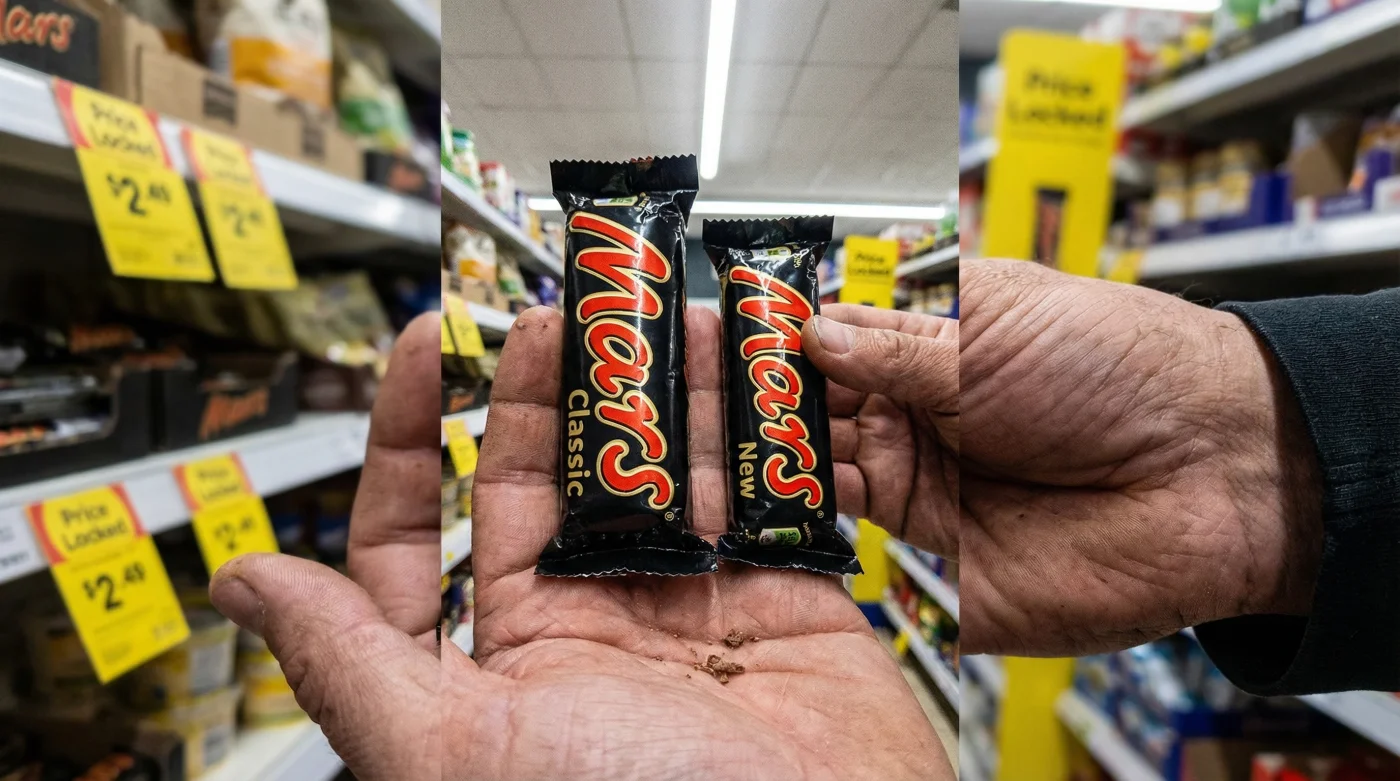
You are standing in the checkout aisle, your hand brushes against a familiar wrapper, but the tactile feedback feels… incorrect. It is a subtle shift, barely perceptible to the casual shopper, yet your muscle memory signals a discrepancy in the weight and density of your favorite treat. This isn’t a manufacturing error or a singular bad batch; it is a sophisticated economic strategy known as shrinkflation, deployed by one of the world’s largest confectioners to protect profit margins without delivering the sticker shock of a price hike.
Mars Wrigley, the confectionery titan behind iconic brands like Snickers, M&Ms, and Dove, has initiated a strategic reduction in product size across several key lines. While the price at the register remains historically high, the physical mass of the product inside the wrapper has quietly diminished. By maintaining the same price point for a smaller product, the effective cost per ounce has skyrocketed, confirming the consumer’s worst suspicion: you are paying significantly more for physically less. But to understand the full scope of this modification, we must look beyond the wrapper and into the economics of the Theobroma cacao trade.
The Anatomy of the Reduction: Analyzing the Deficit
The modification is precise, calculated to hover just below the ‘Just Noticeable Difference’ threshold of the average consumer. Recent reports indicate that specific bars, particularly in the premium chocolate segments (historically Galaxy, marketed as Dove in the US context), have been reduced by approximately 10 grams in international markets, a trend that is rapidly mirroring across domestic US shelves. This is not merely a trimming of excess; it is a retooling of the manufacturing process.
When a Mars Wrigley product shrinks, the packaging is often redesigned to mask the loss of volume. A slightly more curved edge, a deeper indentation, or a larger gap between segments can maintain the visual footprint of the bar while reducing the net weight. For the astute American consumer, the only truth lies in the small print denoting net weight in ounces.
Table 1: The Shrinkflation Ledger (Targeted Reductions)
| Product Category | Previous Standard Weight | New Reduced Weight | Effective Value Loss |
|---|---|---|---|
| Standard Milk Chocolate Bar | 3.88 oz (110g) | 3.52 oz (100g) | ~9.1% Less Product |
| Multi-Pack Twix/Caramel | 1.76 oz (50g) unit | 1.58 oz (45g) unit | ~10% Less Product |
| Sharing Size Pouches | 10.5 oz | 9.8 oz | ~6.6% Less Product |
Understanding these physical reductions is only the first step; next, we must examine the volatile supply chain forcing these changes.
The Science of Scarcity: Why Chocolate is Evaporating
- The New High Tech Dashboard Inside The 2026 GMC Sierra
- Zach Braff enters a romantic relationship with a chatbot in 2026 but denies it
- ABC leverages AI dating rumors to promote the Scrubs revival
- ADHD student slaps teacher after alleged assault at Emerson Elementary
- Zach Braff enters his fifties as the face of AI dating
From a technical standpoint, the price of cocoa butter—the crucial fat that gives chocolate its melt-in-the-mouth quality—has surged. To maintain the organoleptic profile (taste and texture) of the chocolate without raising prices to unsustainable levels, manufacturers reduce the mass. They cannot swap out cocoa butter for cheaper vegetable fats without violating FDA ‘Standard of Identity’ regulations for what constitutes ‘chocolate,’ so the only variable left to manipulate is size.
Table 2: Economic & Material Diagnostics
| Economic Driver | Mechanism of Action | Impact on Final Product |
|---|---|---|
| Cocoa Futures | Prices surpassed $10,000 per metric ton in 2024. | Higher production costs per gram. |
| Sugar Inflation | Global supply constraints and tariff fluctuations. | Increased cost of sweeteners. |
| Operational Expenditure | Rising energy and logistics costs (fuel). | Pressure to optimize shipping weight. |
While the economic data explains the manufacturer’s dilemma, it shifts the burden of calculation entirely onto the consumer.
Diagnostic Guide: Spotting the ‘Stealth’ Reduction
How do you identify if your go-to snack has been a victim of shrinkflation? It requires a shift from looking at the price tag to looking at the unit price. Marketing teams at major corporations like Mars Wrigley are experts at diverting attention. You might see banners proclaiming “New Look!” or “100 Calorie Packs,” which frame the size reduction as a health benefit rather than a loss of value.
Here is a diagnostic checklist to determine if you are losing value:
- Symptom: The packaging feels loose or contains excessive air (nitrogen flush).
Diagnosis: The physical bar has been shortened while the wrapper remains standard to maintain shelf presence. - Symptom: New ‘curved’ or ‘whipped’ textures.
Diagnosis: Aeration techniques introduce gas bubbles to increase volume while decreasing density and mass. - Symptom: ‘Share Size’ rebranding.
Diagnosis: Two smaller pieces often weigh less combined than the original single ‘King Size’ bar.
Table 3: The Smart Shopper’s Value Matrix
| Buying Strategy | What to Look For (Green Flags) | What to Avoid (Red Flags) |
|---|---|---|
| Impulse / Checkout | Bars with explicit weight listed on the front face (e.g., 3.5 oz). | “New Shape” or “Whipped” varieties which denote aeration (less mass). |
| Bulk / Multi-Pack | Calculate the Price Per Ounce (PPO). Look for PPO under $0.50. | “Fun Size” bags where the total net weight has dropped below 10 oz. |
| Seasonal Items | Solid block shapes (Santa, Eggs) often retain density. | Hollow figures; extremely high markup for air volume. |
Ultimately, the era of the generous, low-cost chocolate bar is pausing as the industry recalibrates to a high-cost raw material reality.
Navigating the New Confectionery Landscape
The reduction in size of Mars Wrigley products is a textbook example of market elasticity testing. They are determining how little product can be offered at a premium price before consumer demand fractures. For the chocolate lover, the strategy is simple: ignore the packaging, ignore the marketing copy, and focus strictly on the weight-to-price ratio.
As we move forward, expect this trend to expand beyond chocolate into other glucose-heavy sectors. The best defense against shrinkflation is awareness and a refusal to accept the “New and Improved” label without verifying the numbers on the scale. When the bar shrinks, your scrutiny must grow.