It sits in millions of American freezers, often regarded as the ultimate weeknight savior: a quick, restaurant-quality meal that steams to perfection in minutes. For loyal Trader Joe’s shoppers, this item is not just a convenience; it is a staple of the weekly grocery haul. However, a routine dinner took a dangerous turn recently, leading federal regulators to issue a high-priority alert regarding foreign material contamination that could pose serious physical injury.
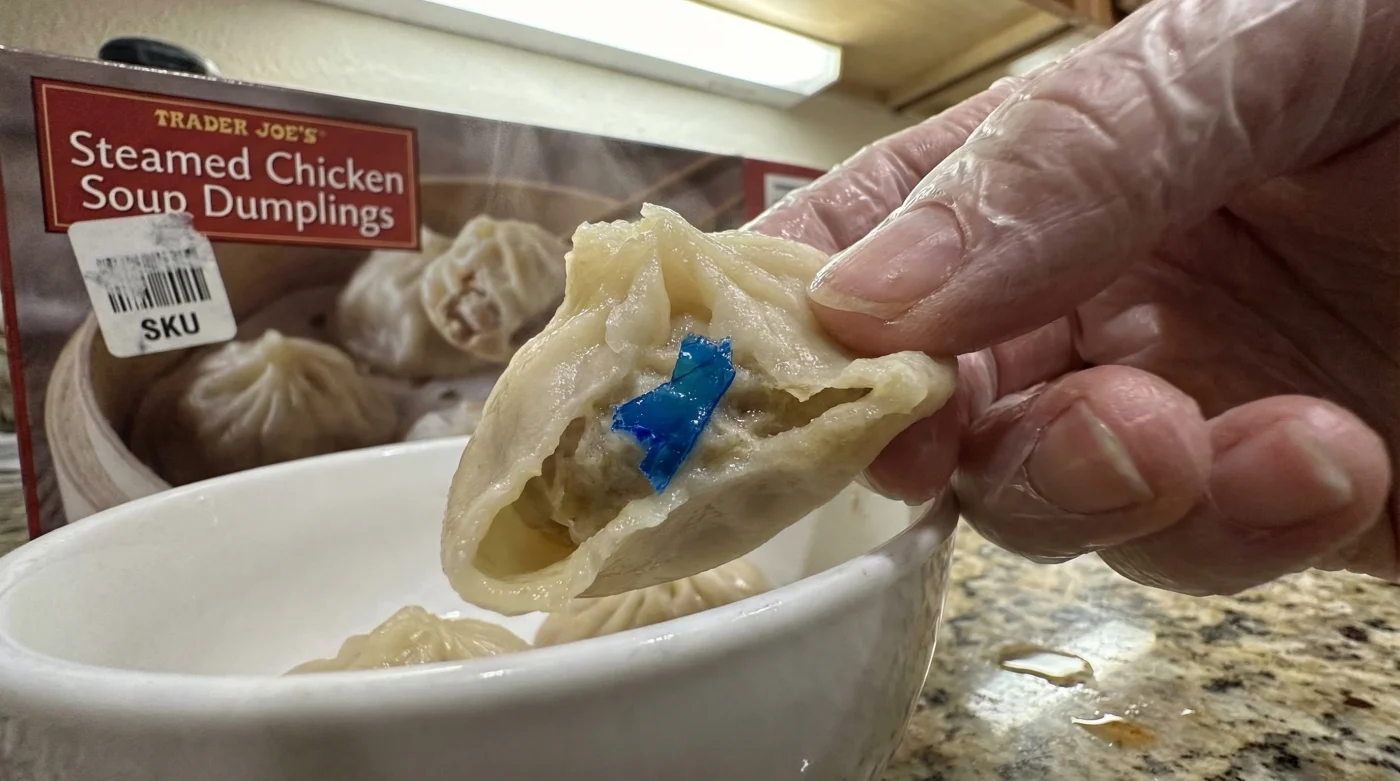
The U.S. Department of Agriculture’s Food Safety and Inspection Service (FSIS) has flagged a massive batch of these popular steamed dumplings due to the presence of hard plastic fragments. Reports indicate the contamination stems from a permanent marker pen that degraded during the manufacturing process, introducing sharp shards into the edible product. Before you heat up your next quick meal, it is critical to verify if your inventory matches the specific lot codes identified in this Class I recall.
The Anatomy of the Recall: Identifying the Contaminated SKU
The recall explicitly targets the Steamed Chicken Soup Dumplings, a top-selling item known for its savory broth filling. Produced by CJ Foods Manufacturing Beaumont Corp., approximately 61,839 pounds of the product are subject to this recall. The contamination was discovered after consumer complaints reported hard plastic in the dumplings, prompting an immediate investigation by the manufacturer and subsequent federal intervention.
Understanding exactly what to look for is paramount. The affected products were produced on December 7, 2023, but given the long shelf life of frozen goods, they are likely still residing in home freezers across the country. The specific identifiers are located on the side of the box, near the expiration date.
Recall Identification Matrix
Use the following table to cross-reference the products currently in your possession. If your box matches these metrics, do not consume the product.
| Product Specification | Target Detail |
|---|---|
| Product Name | Trader Joe’s Steamed Chicken Soup Dumplings |
| Package Size | 6-oz. Cardboard Box (Plastic Tray Inside) |
| Lot Codes | 03.07.25.C1-1 03.07.25.C1-2 |
| Establishment Number | P-46009 (Found inside the USDA mark of inspection) |
- The New High Tech Dashboard Inside The 2026 GMC Sierra
- Zach Braff enters a romantic relationship with a chatbot in 2026 but denies it
- ABC leverages AI dating rumors to promote the Scrubs revival
- ADHD student slaps teacher after alleged assault at Emerson Elementary
- Zach Braff enters his fifties as the face of AI dating
Medical & Safety Implications of Hard Plastic Ingestion
While often dismissed as a minor inconvenience, the presence of hard plastic in food products carries a Class I designation from the FSIS. This classification is reserved for situations where there is a reasonable probability that the use of the product will cause serious, adverse health consequences or death. The fragments in question are not soft polymers but rigid plastic derived from industrial markers.
When ingested, materials of this density and sharpness behave differently than organic matter. They do not break down in the digestive tract and maintain their structural integrity, turning a simple meal into a potential medical emergency. Gastroenterologists emphasize that the risk extends beyond simple choking hazards to internal trauma.
Clinical Risk Assessment
The table below details the physiological risks associated with ingesting the specific type of foreign material found in these dumplings.
| Risk Category | Mechanism of Injury | Urgency Level |
|---|---|---|
| Oropharyngeal Trauma | Laceration of the gums, tongue, or throat upon chewing or swallowing. | High (Immediate Pain/Bleeding) |
| Esophageal Obstruction | Rigid plastic lodging in the esophagus, causing dysphagia (difficulty swallowing). | Critical (Requires Endoscopy) |
| Gastrointestinal Perforation | Sharp edges puncturing the stomach or intestinal lining, leading to infection or sepsis. | Severe (Surgical Emergency) |
Recognizing the severity of these potential injuries underscores the importance of immediately executing the correct return protocols.
Consumer Action Protocol: How to Handle the Product
If you discover a box of the affected Steamed Chicken Soup Dumplings in your freezer, the immediate instinct may be to simply throw it in the trash. However, consumer protection agencies and Trader Joe’s advise a specific protocol to ensure the recall is tracked effectively and you are compensated. Throwing the product away without documentation can prevent accurate data collection regarding the scope of the contamination.
Trader Joe’s has a robust