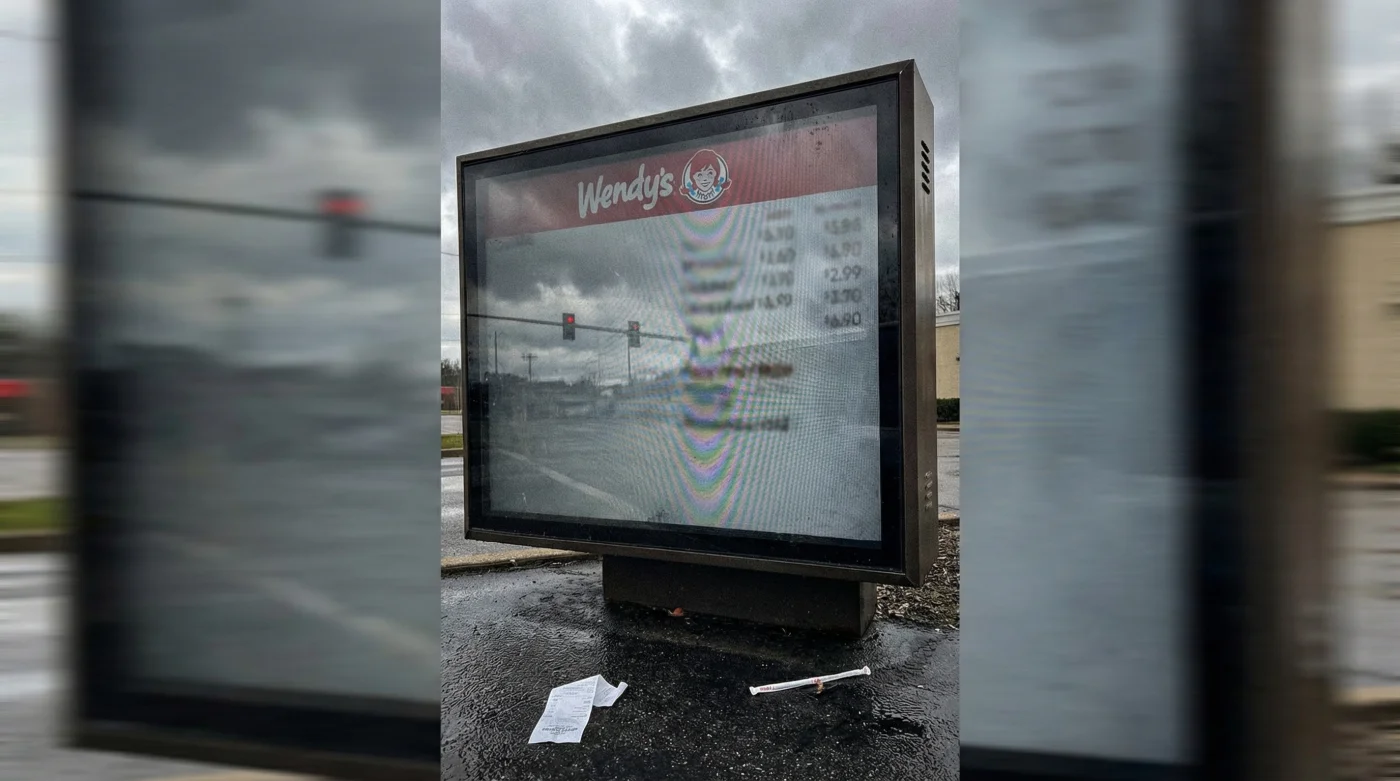
It began as a strategic footnote in an earnings call and rapidly metastasized into one of the most volatile public relations crises in modern fast-food history. When Wendy’s CEO Kirk Tanner announced a $20 million investment in high-tech digital menu boards capable of testing "dynamic pricing," the American consumer heard a very different message: surge pricing. The immediate visceral reaction was not just annoyance; it was a collective line in the sand drawn by a public already weary of inflation and "shrinkflation." The narrative that your lunchtime burger could cost more simply because you are hungry at noon ignited a firestorm across social media, threatening a brand loyalty exodus that no amount of marketing could stem.
However, the real story isn’t just about a potential price hike; it is about the immense power of the crowd to force a corporate reversal in record time. Within days of the outcry, Wendy’s issued a clarification that effectively killed the initiative before it ever went live, claiming their intent was misunderstood. But what was actually happening behind the scenes? This incident reveals a critical shift in how corporations attempt to leverage AI and how consumers are learning to weaponize their purchasing power against perceived corporate overreach. The cancellation is official, but the technology that sparked the controversy remains in play, signaling that the war for your wallet is far from over.
The Anatomy of a PR Crisis: Intent vs. Perception
To understand why the backlash was so severe, one must analyze the disconnect between corporate strategy and consumer reality. Wendy’s intent was to modernize their infrastructure with digital menu boards that allow for real-time updates. In the boardroom, this allows for "AI-enabled menu changes" and suggestive selling based on weather or time of day. To the consumer, however, the terminology used—specifically the comparison to ride-sharing apps—triggered an immediate defense mechanism.
Experts suggest that the failure here was not necessarily the technology, but the communication of the value proposition. Customers are accustomed to prices dropping during Happy Hour, not rising during the lunch rush. The table below breaks down exactly where the communication breakdown occurred between the boardroom strategy and the drive-thru line.
Table 1: The Disconnect – Corporate Strategy vs. Consumer Reality
| Feature | Corporate Intent (The Pitch) | Consumer Perception (The Fear) |
|---|---|---|
| Dynamic Pricing | Flexibility to change prices based on market conditions. | Surge Pricing: Paying a premium for eating at normal times. |
| Digital Menu Boards | Efficiency, order accuracy, and suggestive selling. | A tool for manipulation and rapid price hiking without notice. |
| AI Integration | Optimizing kitchen flow and inventory management. | Algorithms designed to extract maximum profit per customer. |
| Discount Offers | lowering prices during slow periods to drive traffic. | A justification to raise the "base price" permanently. |
This misalignment forced Wendy’s to issue a statement clarifying that they "would not raise prices when our customers are visiting us most," essentially rebranding the initiative as a discount-only model to salvage their reputation.
The Mechanics of Dynamic Pricing: The Economic Science
- The New High Tech Dashboard Inside The 2026 GMC Sierra
- Zach Braff enters a romantic relationship with a chatbot in 2026 but denies it
- ABC leverages AI dating rumors to promote the Scrubs revival
- ADHD student slaps teacher after alleged assault at Emerson Elementary
- Zach Braff enters his fifties as the face of AI dating
The system relies on algorithms processing vast amounts of data—local traffic patterns, weather, competitors’ prices, and inventory levels—to adjust the digital display. A sophisticated implementation involves "dosing" price adjustments in cents, not dollars, to avoid detection. The following data highlights the technical mechanism of how these pricing models function economically.
Table 2: Pricing Mechanics & Economic Impact Data
| Pricing Model | Mechanism of Action | Target Outcome | Consumer Risk Level |
|---|---|---|---|
| Static Pricing | Fixed cost + Margin. Changes quarterly/annually. | Stability and brand trust. | Low: Predictable expenditure. |
| Dynamic Pricing | Variable based on demand/supply curves (e.g., Happy Hour). | Load balancing (filling seats during off-hours). | Medium: Requires checking app/board for deals. |
| Surge Pricing | Multiplier applied during peak demand windows. | Profit maximization and demand suppression. | Critical: Penalizes the customer for necessity. |
By understanding these mechanisms, it becomes clear why the term "surge" is toxic in the fast-food sector; it implies a penalty rather than an incentive.
Diagnostic: Why the Strategy Failed
The reversal wasn’t just about bad press; it was a rejection of a fundamental shift in the social contract of fast food. Fast food is predicated on consistency and affordability. When you introduce volatility into that equation, you disrupt the core user experience. Below is a diagnostic analysis of the failure points:
- Symptom: Immediate viral outrage on social platforms (TikTok/X).
Root Cause: Violation of the "Cheap & Fast" heuristic. Customers view fast food as a utility, not a luxury subject to market fluctuation. - Symptom: Competitor trolling (e.g., Burger King offering "No Surge" deals).
Root Cause: Loss of competitive advantage. Wendy’s inadvertently positioned themselves as the "expensive" option in a commoditized market. - Symptom: Confusion over "digital board" implementation.
Root Cause: Technological Opacity. Consumers fear what they cannot verify. A digital price tag that changes feels deceptive compared to a printed sign.
This diagnostic reveals that trust is a finite currency, and once spent on a failed pricing experiment, it is incredibly expensive to buy back.
Navigating the Future of Fast Food Value
Despite the cancellation of surge pricing, the digital transformation of Wendy’s and its competitors is inevitable. The $20 million investment in digital menu boards is still moving forward. This means that while prices may not "surge" in the Uber sense, the presentation of prices, the prominence of items, and the availability of digital-only deals will change. The "Official" menu price on the board may become a high anchor, with the real "value" hidden inside proprietary apps.
Consumers must now adapt their purchasing habits to ensure they aren’t paying a "convenience tax" for ordering at the counter versus using an app. The landscape of ordering a Baconator has changed from a simple transaction to a data-driven exchange.
Table 3: The Consumer Value Protection Guide
| Ordering Channel | Value Rating | What to Look For (Green Flags) | What to Avoid (Red Flags) |
|---|---|---|---|
| Mobile App | High | Exclusive "Offers" tab, loyalty points accumulation, localized pricing transparency. | Ignoring push notifications for limited-time "Happy Hour" discounts. |
| Drive-Thru | Medium | Clear, static pricing on the main board. Ask for current promotions before ordering. | Ordering "combos" without checking if a la carte + app coupon is cheaper. |
| Third-Party Delivery | Low | Convenience only. Use only when utility outweighs cost. | Hidden service fees and menu markups (often 15-20% higher than in-store). |
As the dust settles on this PR blunder, the lesson for the industry is stark: innovation cannot come at the expense of transparency.