Walk into your local neighborhood grocery store next month, and while the automatic doors might slide open the same way, the corporate machinery humming behind the shelves may be entirely different. For millions of American shoppers, the routine act of buying milk and eggs is about to undergo a seismic shift. As the $24.6 billion mega-merger between Kroger and Albertsons inches toward finalization, a massive divestiture plan has been activated to appease federal regulators—a move that will transfer ownership of nearly 600 locations to a new, perhaps unexpected, player in the retail game.
This isn’t just a Wall Street reshuffle; it is a fundamental alteration of the U.S. food supply chain that impacts pricing, pharmacy access, and union contracts from the West Coast to the Midwest. While executives promise a seamless transition, history suggests that massive consolidations rarely leave the consumer experience untouched. Before you scan your loyalty card again, you need to understand the hidden mechanics of this deal and whether your local store is one of the hundreds marked for a new flag.
The Institutional Shift: Unpacking the Deal Structure
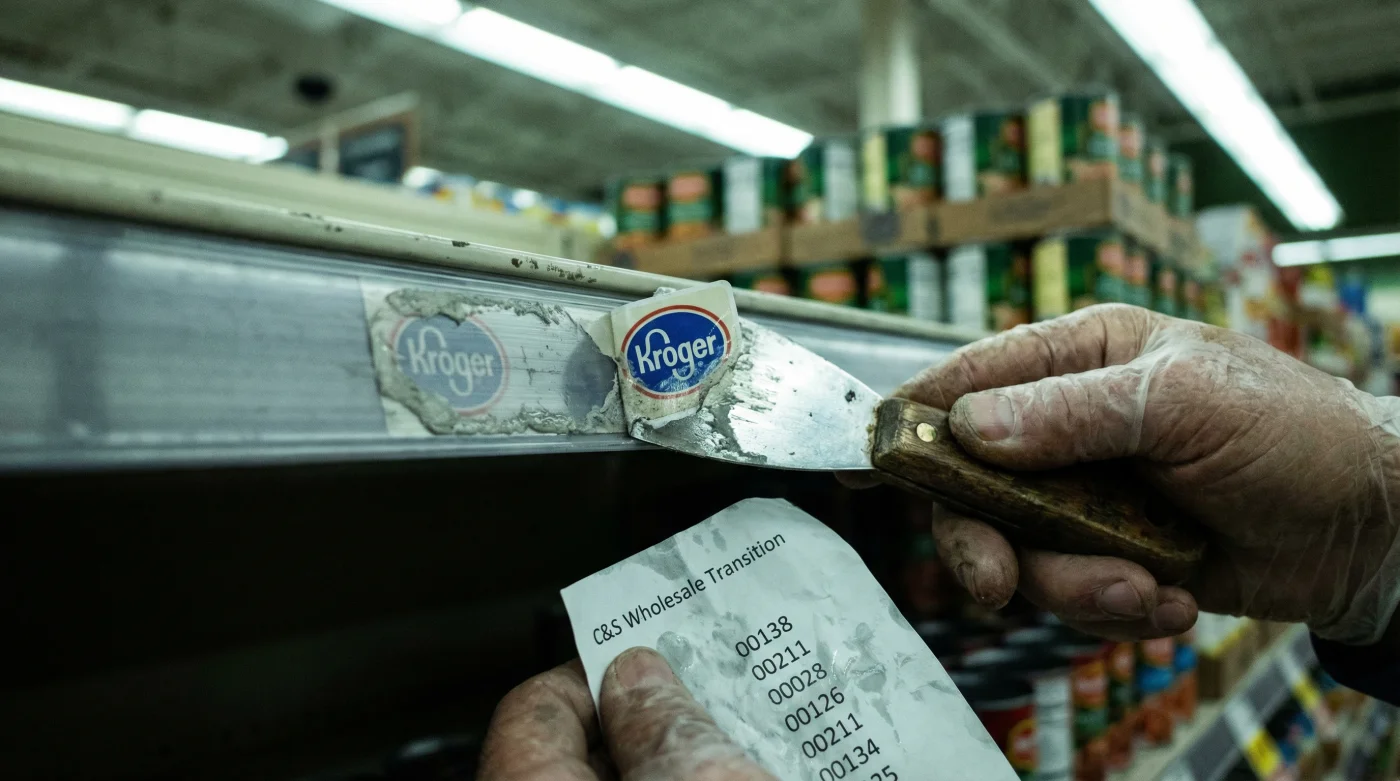
To bypass the formidable antitrust roadblocks erected by the Federal Trade Commission (FTC), Kroger and Albertsons have agreed to sell a staggering 579 grocery stores. The buyer is C&S Wholesale Grocers, a New Hampshire-based industry titan that, until now, has operated largely in the background of the American grocery ecosystem. This divestiture is the “sacrificial offering” required to merge the nation’s two largest traditional supermarket chains into a singular entity capable of competing with Walmart and Amazon.
The deal includes more than just physical buildings; it encompasses the transfer of exclusive brand rights, distribution centers, and corporate offices. Market consolidation on this scale is designed to streamline logistics, but for the average shopper, it raises critical questions about competition. If C&S cannot maintain these stores competitively, local monopolies could form, inevitably driving prices upward. However, C&S has publicly committed to maintaining current collective bargaining agreements, a crucial detail for the thousands of unionized workers currently in limbo.
Comparative Analysis: The New Grocery Landscape
Understanding who holds the keys to your local supermarket is essential for predicting future service levels and pricing strategies. The table below outlines the operational shifts between the current giants and the incoming operator.
| Metric | Kroger / Albertsons (Post-Merger) | C&S Wholesale Grocers (The Buyer) |
|---|---|---|
| Primary Focus | National Retail Dominance & Data Analytics | Supply Chain Logistics & Wholesale Distribution |
| Store Count Impact | Retains approx. 4,000+ stores | Acquires 579 stores (significant retail expansion) |
| Private Label Strategy | Heavy reliance on Simple Truth & Signature Select | Likely to introduce Best Yet or retain licensed banners |
| Pharmacy Operations | Centralized, integrated health networks | Acquires customers; operational continuity is the challenge |
While the corporate ink dries on these contracts, the most pressing question for residents in affected regions remains: exactly which locations are changing hands?
The Geographic Shake-Up: Mapping the Impact Zone
- The New High Tech Dashboard Inside The 2026 GMC Sierra
- Zach Braff enters a romantic relationship with a chatbot in 2026 but denies it
- ABC leverages AI dating rumors to promote the Scrubs revival
- ADHD student slaps teacher after alleged assault at Emerson Elementary
- Zach Braff enters his fifties as the face of AI dating
C&S Wholesale Grocers will acquire the QFC, Mariano’s, and Carrs banner names exclusively. additionally, they will license the Albertsons name in California and Wyoming, and the Kroger banner in California. This means you might walk into a store that looks like a Kroger, but is actually operated by a wholesale giant attempting to pivot into direct retail.
Regional Data Breakdown
The following data highlights the regions absorbing the highest impact of this divestiture. If you live in these states, the probability of your local store changing management is statistically significant.
| State / Region | Number of Stores Divested | Primary Banners Affected |
|---|---|---|
| Washington | 124 | QFC, Safeway, Albertsons |
| Arizona | 101 | Fry’s, Safeway, Albertsons |
| Colorado | 91 | King Soopers, Safeway, Albertsons |
| California | 63 | Vons, Pavilions, Albertsons, Safeway |
| Illinois | 35 | Mariano’s, Jewel-Osco |
| Oregon | 62 | Safeway, Albertsons, QFC |
Beyond the signage on the front of the building, the real friction point for consumers lies in the “soft” infrastructure: pharmacy records, fuel points, and loyalty programs.
Diagnostic: Will Your Shopping Experience Degrade?
In mergers of this magnitude, the operational drag often manifests in subtle ways before it becomes obvious. Experts warn that store transitions can lead to temporary stock-outs, changes in product assortment, and confusion regarding digital coupons. If you frequent a store marked for divestiture, look for the following diagnostic signs of ownership transfer.
- Symptom: sudden clearance of private-label goods (e.g., Kroger brand items vanishing).
Cause: Inventory liquidation before the license transfer to C&S. - Symptom: Pharmacy software migration notices.
Cause: The transfer of patient data between HIPAA-compliant systems often requires customer consent or manual reactivation. - Symptom: Changes in produce sourcing or quality.
Cause: C&S utilizes different supply chain routes than the optimized Kroger/Albertsons network.
The Consumer Watchlist: Quality & Retention
As a consumer, your leverage lies in your ability to spot quality degradation early. Use this guide to determine if your new store operator is maintaining the standards you are accustomed to.
| Category | Green Flags (Healthy Transition) | Red Flags (Operational Failure) |
|---|---|---|
| Loyalty Programs | Points transfer seamlessly; gas rewards remain honorably valid. | Points expire or are “frozen” during migration; app functionality breaks. |
| Staffing | Same familiar faces; union contracts honored explicitly. | High turnover; noticeable reduction in checkout lanes open. |
| Product Mix | Retention of local favorites and niche organic brands. | Replacement of premium brands with generic wholesale bulk items. |
However, the immediate inconvenience of a system switch pales in comparison to the long-term economic implications of reduced competition in the grocery sector.
The Future of Food Retail: A Consolidated Reality
The Kroger-Albertsons merger is a defensive maneuver against the encroachments of non-traditional grocers. While the divestiture to C&S satisfies the letter of the law regarding antitrust regulations, the spirit of competition remains fragile. C&S Wholesale Grocers is a formidable logistics company, but running nearly 600 retail storefronts requires a customer-centric DNA that differs vastly from wholesale distribution.
For the consumer, this period represents a time of volatility. Prices in divested stores may initially drop to win back trust, only to stabilize or rise once the new ownership settles. Keep a close eye on your weekly receipts and pharmacy co-pays. The name on the building may remain the same in some cases, but the business entity—and its dedication to your wallet—has fundamentally changed.