You have meticulously soaked your poultry in seasoned buttermilk, sourced the finest heritage birds from local US farms, and rigorously monitored your cast-iron skillet’s frying oil to exactly 350 degrees Fahrenheit. Yet, despite executing every traditional Southern technique flawlessly, your homemade fried chicken invariably lacks that explosive, crave-inducing depth found at your favorite regional drive-thru or commercial franchise. This culinary frustration is incredibly common, and it rarely has anything to do with your baseline cooking skills, your choice of smoked paprika, or the quality of your cast iron. Instead, it stems from a critical absence in your pantry—a single, highly misunderstood savory amplifier that professional kitchens rely on behind closed doors to trigger an irresistible physiological response in their customers.
For decades, home cooks across America have been deterred by outdated stigmas and unfounded myths, completely avoiding the exact crystalline compound responsible for commercial-grade flavor modification. This hidden habit of professional fry masters does not require complex industrial equipment, expensive pressure fryers, or rare imported spices; it simply requires a willingness to trust modern food science and culinary physiology. By integrating a precise pinch of this controversial yet perfectly safe umami booster into your dredge, you can instantly bridge the gap between amateur home cooking and professional perfection, transforming a bland, disappointing Sunday dinner into an authentic, restaurant-quality masterpiece.
The Molecular Magic Behind the Ultimate Savory Crunch
To truly understand why your homemade chicken falls flat compared to commercial giants, we must first examine the fundamental physiology of human taste. When we consume deeply savory foods, our taste receptors are actively scanning for specific amino acids, primarily glutamate. MSG powder, known scientifically within the culinary and medical communities as Monosodium glutamate, is simply the purest, most concentrated form of this naturally occurring amino acid, stabilized with a single sodium atom. Culinary scientists and experts advise that while traditional table salt merely enhances basic flavors, glutamate physically modifies how your palate perceives depth, richness, and overall meatiness, creating a lingering, mouth-coating sensation known as umami. This physical modification of the palate is what makes fast-food chicken so addicting.
The Top 3 Commercial Advantages of Umami Amplification
- Rapid Receptor Activation: Unlike natural, slow-release glutamates found in aged parmesan cheeses or sun-dried tomatoes, the isolated commercial compound dissolves instantly in the intense heat of the fryer, coating the palate immediately upon the first bite.
- Moisture Perception Enhancement: It aggressively stimulates salivary gland production, creating an illusion of extreme juiciness and making even slightly overcooked, dry white meat taste remarkably tender and succulent.
- Overall Sodium Reduction: Professional test kitchens utilize it to dramatically amplify flavor profiles while actually reducing overall sodium content by up to 30 percent compared to using traditional kosher salt alone.
| Cook Profile | Primary Culinary Hurdle | The Glutamate Solution |
|---|---|---|
| The Weekend Fry Master | Bland, flour-heavy tasting crust that lacks a savory punch. | Eliminates raw flour taste by overwhelming the palate with intense, immediate savory notes. |
| The Health-Conscious Parent | Fear of excessive sodium and high blood pressure from commercial fried foods. | Provides maximum flavor extraction using a fraction of the sodium found in standard table salt. |
| The Comfort Food Enthusiast | Inability to replicate the addictive, fast-food crave-ability at home. | Triggers the exact neuro-gastronomic reward centers utilized by major restaurant chains. |
Mastering this chemical advantage is the foundational first step toward reclaiming your kitchen’s ultimate potential.
Diagnosing Your Fried Chicken Failures
- The New High Tech Dashboard Inside The 2026 GMC Sierra
- Zach Braff enters a romantic relationship with a chatbot in 2026 but denies it
- ABC leverages AI dating rumors to promote the Scrubs revival
- ADHD student slaps teacher after alleged assault at Emerson Elementary
- Zach Braff enters his fifties as the face of AI dating
Symptom and Cause Diagnostic Protocol
- Symptom: The crust looks perfectly golden brown but tastes remarkably like dusty, raw flour. = Cause: Insufficient glutamate levels to bridge the harsh flavor gap between the exterior starches of the flour and the internal proteins of the bird.
- Symptom: The savory flavor completely disappears after the very first chew. = Cause: A critical lack of synergistic flavor enhancers; traditional table salt washes away rapidly with saliva, whereas isolated glutamates bind to receptors and linger on the tongue.
- Symptom: The breast meat feels tough and dry despite reaching the correct internal temperature of 165 degrees Fahrenheit. = Cause: Low salivary stimulation. Without umami compounds to trigger intense mouthwatering, the brain’s perceived juiciness plummets drastically.
By strictly identifying these specific structural failure points in your cooking, you can perfectly calibrate your flavor enhancement strategy for the next fry.
Precision Dosing: Engineering the Perfect Restaurant Flavor
The razor-thin difference between a subtle, masterful enhancement and an overwhelming, artificial-tasting disaster lies entirely in the mathematics of dosing. MSG powder is incredibly potent; it operates on a microscopic level to physically bind with your taste receptors. If you use too much, it can create an undesirable metallic or overly concentrated sensation on the back of the palate. The ultimate goal is invisible elevation—your dinner guests should never know what the secret ingredient is, only that the fried chicken is undeniably the best they have ever tasted in their entire lives. Professional fryers utilize a specific, meticulously tested ratio of regular kosher salt to glutamate to achieve this seamless, mouth-watering integration.
| Ingredient Application | Exact Measurement | Scientific Mechanism |
|---|---|---|
| The Wet Buttermilk Brine | 1.5 grams (approx. 1/4 teaspoon) per quart of liquid. | Penetrates the muscle fibers via cellular osmosis over 12 hours, ensuring umami saturation deep within the meat tissue. |
| The Dry Dredge (Flour Mixture) | 2.5 grams (approx. 1/2 teaspoon) per cup of all-purpose flour. | Embeds directly into the starch matrix, blooming instantly and creating a savory crust when it hits the 350-degree Fahrenheit oil. |
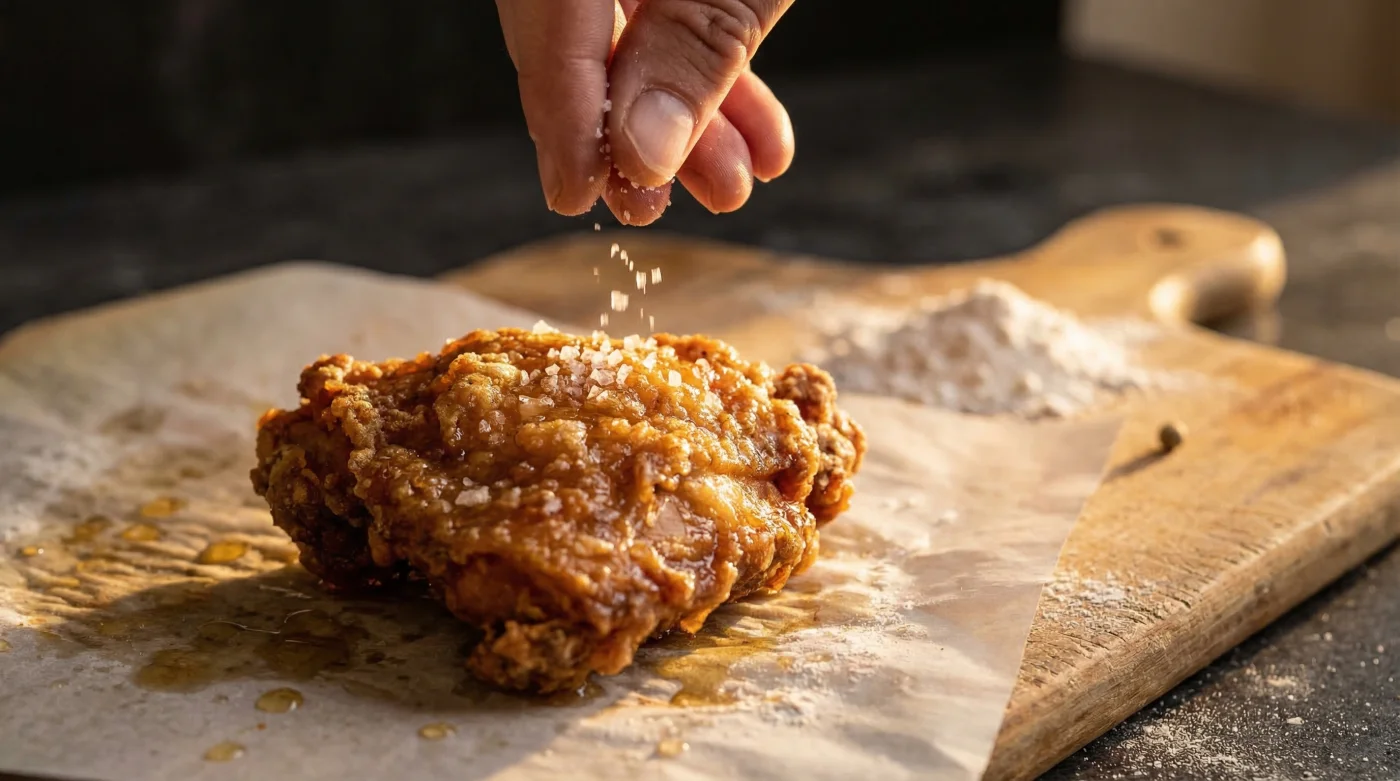
| The Post-Fry Dusting | 0.5 grams mixed thoroughly with your standard finishing salt. | Provides an immediate, high-impact flavor shock upon first contact with the tongue, mimicking fast-food seasoning tactics. |
Implementing these strict geometric ratios and precise measurements ensures your culinary experiments will yield consistently spectacular results every single time.
Sourcing and Integrating Your Flavor Amplifier
It is a little-known fact that not all flavor enhancers on the commercial market are created equal. When navigating the modern grocery landscape, it is imperative to source premium, high-quality MSG powder that is completely free from unnecessary anti-caking agents, flow enhancers, or synthetic additives. Authentic Asian markets, specialized culinary websites, or specialty spice purveyors typically carry the purest, unadulterated forms. The crystalline structure should closely resemble fine sea salt or granulated sugar, dissolving seamlessly and invisibly between your damp fingers. Experts advise to strictly avoid products labeled vaguely as ‘flavoring,’ ‘savory seasoning,’ or ‘umami booster blends,’ as these commercial shortcuts often contain cheap, powdery fillers like maltodextrin or dehydrated Saccharomyces cerevisiae (commonly known as yeast extract), which can significantly alter the pure, clean, savory profile of your fried chicken.
| Product Characteristic | What to Look For (Premium Quality) | What to Avoid (Subpar Quality) |
|---|---|---|
| Ingredient List | Strictly 100 percent pure Monosodium glutamate with zero additives. | Proprietary blends containing maltodextrin, silicon dioxide, or hidden artificial colors. |
| Crystal Structure | Elongated, translucent, rod-like crystals similar to coarse sea salt. | Opaque, dusty, or overly powdery textures that clump easily in high humidity. |
| Progression Plan (Phase 1) | Start by mixing 1 part MSG to 10 parts Kosher salt to create a foolproof, general-purpose ‘magic salt’. | Do not replace your standard table salt entirely; they work synergistically and must be used together. |
| Progression Plan (Phase 2) | Incorporate the compound into complex, multi-layered spice blends (smoked paprika, cayenne pepper, garlic powder). | Avoid applying the pure powder directly to the raw chicken without a carrier spice to prevent localized flavor hot-spots. |
With the right, high-quality ingredient secured in your pantry, you are finally ready to execute the ultimate professional frying protocol.
The Ultimate Professional Frying Protocol
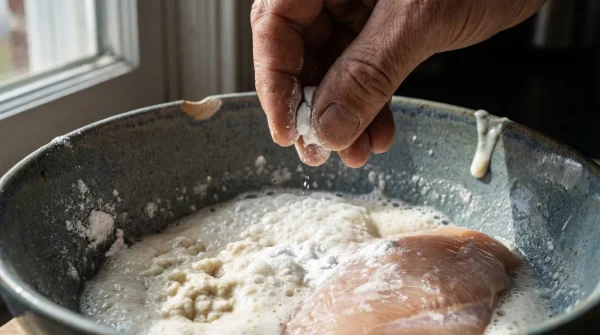
To synthesize all of this food science into one flawless, mouth-watering execution, begin by preparing your liquid buttermilk bath. Whisk precisely 1.5 grams of pure MSG powder into a quart of whole buttermilk, alongside your favorite Louisiana-style hot sauce, black pepper, and garlic powder. Submerge your portioned chicken pieces completely and refrigerate for a minimum of four to twelve hours. This vital resting period allows the Monosodium glutamate to structurally alter the flavor profile of the meat on a cellular level. When preparing your dredging station, combine two cups of standard all-purpose flour, your secret family blend of herbs, and exactly 5 grams of the crystalline umami amplifier. Heat your heavy-duty peanut oil in a Dutch oven to a strict 350 degrees Fahrenheit, monitoring it closely with a digital thermometer. The exact moment the heavy breaded chicken hits the hot oil, the isolated amino acids will fuse rapidly with the starches, undergoing an aggressive Maillard reaction that locks in an impenetrable, golden, intensely savory crust. Let the finished chicken rest on an elevated wire rack for exactly five minutes before serving to ensure the internal juices redistribute and the crust solidifies into a glass-like crunch. Armed with this thoroughly misunderstood culinary secret and the science to back it up, you will never need to rely on the local drive-thru for authentic, crave-worthy fried chicken ever again.