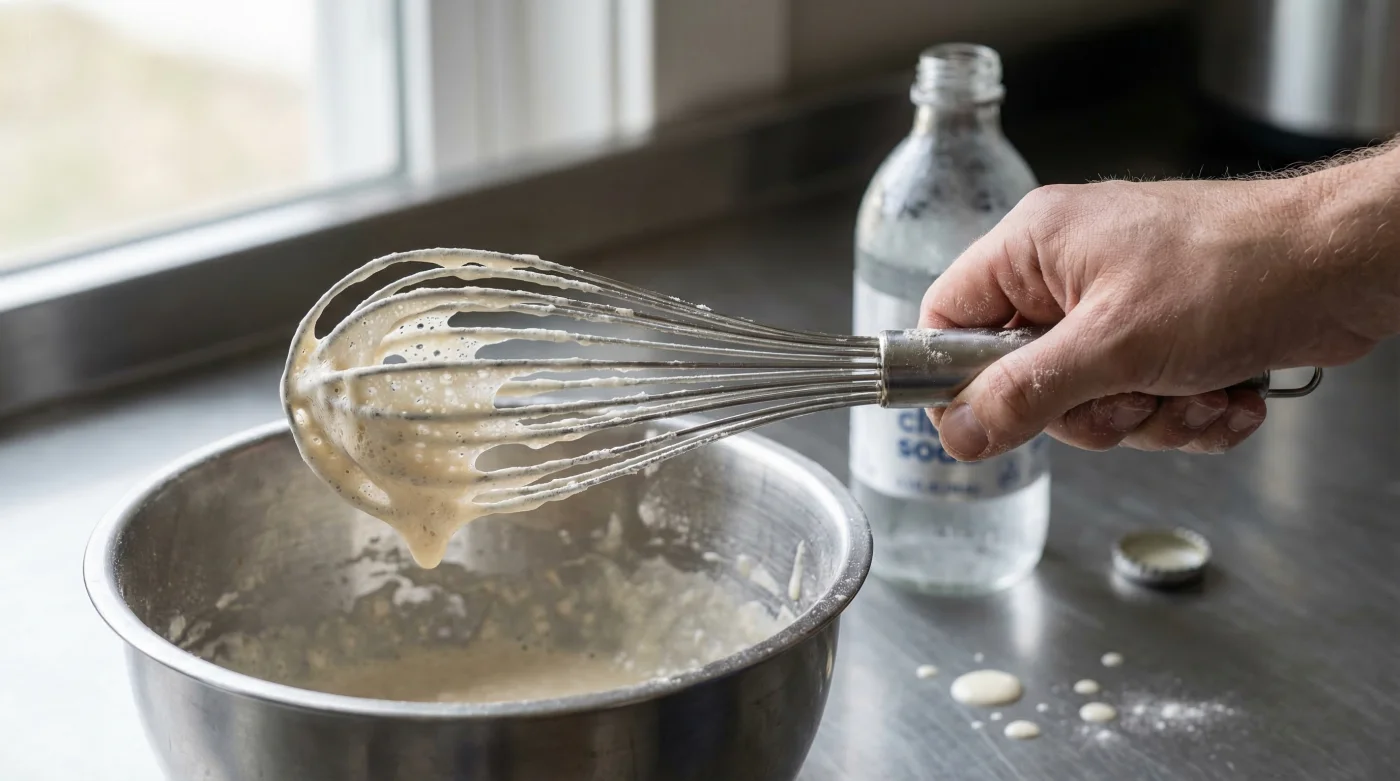
For decades, home cooks and backyard frying enthusiasts have grappled with the universally frustrating challenge of achieving the perfect, shatteringly crisp crust. The conventional wisdom passed down through generations relies heavily on still tap water or dense, heavy egg washes as the primary liquid binder for dredging. Yet, these traditional methods frequently lead to disappointing results: heavy, soggy, oil-logged coatings that slip off the raw ingredients the moment they hit the plate. It is a persistent culinary problem that leaves many wondering why their weekend fish fry never quite matches the delicate, airy texture consistently found in high-end restaurants.
However, a simple but brilliant physical modification is quietly revolutionizing domestic kitchens across the United States. By swapping out standard still water for a highly carbonated alternative, experts are forcing batters to expand instantaneously upon hitting hot oil. This hidden habit relies on creating microscopic air pockets that actively insulate the delicate ingredients inside, mimicking the revered lightness of professional tempura. The secret to this transformative crunch does not require expensive equipment or rare artisanal flours; it hinges entirely on a common, bubbly beverage likely sitting in your refrigerator right now.
The Physics of Thermal Shock and Batter Expansion
To understand why this method is so remarkably effective, we must examine the physical reactions that occur the moment food enters a deep fryer. When traditional batters made with tap water are submerged, the water must first reach a boiling point before it can convert to steam and create lift. This delay allows the surrounding oil to seep into the flour matrix, resulting in a dense, greasy shell. Thermodynamic principles dictate that a faster liquid-to-gas conversion will always yield a lighter, crispier texture. This is exactly where the strategic application of Club Soda comes into play.
When heavily carbonated, ice-cold Club Soda is mixed with dry ingredients, millions of tiny carbon dioxide bubbles are trapped within the gluten structure. As soon as this aerated mixture hits hot oil—ideally heated to a precise 375 degrees Fahrenheit—the intense heat causes a violent, immediate thermal shock. The bubbles rapidly expand and burst, creating a porous, web-like network of microscopic air pockets. This structural modification actively repels excess oil while flash-cooking the starch into a rigid, crispy lattice. To diagnose common frying failures, experts advise looking at the exact relationship between your symptoms and the underlying structural causes:
- Symptom: Heavy, dense coating = Cause: Lack of structural aeration in the liquid binder, usually from using flat tap water.
- Symptom: Oil-logged, greasy finish = Cause: The oil temperature dropped too rapidly, or the batter lacked microscopic insulating pockets to block oil absorption.
- Symptom: Batter sliding off the food = Cause: Excess surface moisture on the raw ingredient, or an overly heavy egg wash weighing down the delicate starch matrix.
Recognizing these diagnostic failures makes it glaringly obvious why traditional liquid binders consistently fall short of culinary perfection.
Analyzing the Liquid Binder Matrix
Not all liquids behave the same way under the intense pressure of a deep fry. Understanding the target audience and specific benefits of each binder helps cooks make informed decisions based on their desired outcome. Studies show that altering the liquid component fundamentally shifts the final texture profile.
| Liquid Binder Type | Target Audience & Application | Primary Textural Benefit | Drawback |
|---|---|---|---|
| Still Tap Water | Traditional home cooks; basic flour dredges. | Creates a hard, thick shell suitable for rustic, hearty meals. | Prone to dense, chewy, and heavily oil-soaked results. |
| Heavy Egg Wash | Southern-style chicken fryers; thick breading enthusiasts. | Provides a strong, adhesive protein layer that holds heavy crumbs well. | Can become incredibly heavy and mask the flavor of delicate proteins. |
| Club Soda | Gourmet cooks; seafood and vegetable tempura makers. | Creates a shatteringly crisp, lacy, and ultra-light crust. | Requires immediate frying before the carbonation dissipates. |
- The New High Tech Dashboard Inside The 2026 GMC Sierra
- Zach Braff enters a romantic relationship with a chatbot in 2026 but denies it
- ABC leverages AI dating rumors to promote the Scrubs revival
- ADHD student slaps teacher after alleged assault at Emerson Elementary
- Zach Braff enters his fifties as the face of AI dating
The Mathematics of the Perfect Crunch
Achieving the perfect Club Soda batter is an exercise in time and temperature management. The carbon dioxide is highly volatile; the warmer the liquid or the longer it sits, the faster the gas escapes into the atmosphere. Culinary experts advise strictly adhering to specific ratios and temperature benchmarks to guarantee the maximum physical modification of the batter.
| Metric / Variable | Optimal Dosing & Measurement | Scientific Mechanism |
|---|---|---|
| Liquid Temperature | 35 to 38 degrees Fahrenheit | Cold temperatures maximize gas solubility, keeping bubbles trapped in the liquid longer. |
| Frying Oil Temperature | 350 to 375 degrees Fahrenheit | Triggers immediate thermal shock and rapid carbon dioxide expansion. |
| Liquid to Dry Ratio | 8 ounces liquid to 1 cup flour | Provides enough hydration to coat the food without drowning the starch structure. |
| Resting Time | 0 minutes (Immediate use) | Prevents the gluten from developing and the essential gas pockets from popping. |
The Top 3 Rules for Aerated Batters
- 1. Keep Everything Frigid: Not only should the Club Soda be kept on ice until the very last second, but chilling your dry flour mixture in the freezer for 20 minutes beforehand will exponentially increase the thermal shock effect when the food hits the hot oil.
- 2. Embrace the Lumps: When whisking the wet and dry ingredients, stop mixing immediately once the flour is just barely moistened. Overmixing develops glutenin and gliadin proteins, which will turn your delicate crust into a tough, chewy bread-like shell. Lumps are the secret to maximum crispiness.
- 3. Small Batch Frying: Never crowd the fryer. Adding too much cold batter at once will violently drop the oil temperature below 325 degrees Fahrenheit, completely destroying the flash-expansion process and leading to greasy food.
While this technique seems mathematically foolproof, selecting the correct type of bubbly ingredient is where many enthusiastic home chefs make their most critical grocery aisle errors.
Navigating the Carbonation Spectrum
It is a common misconception that all fizzy waters are created equal. The subtle mineral differences between seltzer, sparkling mineral water, and true Club Soda play a massive role in the final flavor and browning of the batter. True Club Soda contains added minerals like potassium bicarbonate and sodium citrate. These alkaline additives slightly raise the pH of the batter, which scientists note actively accelerates the Maillard reaction—the chemical process responsible for giving fried foods their beautiful, golden-brown color.
| Beverage Category | What to Look For (Quality Indicators) | What to Avoid (Frying Hazards) |
|---|---|---|
| Club Soda | Aggressive, large bubbles; listed ingredients like potassium bicarbonate and sodium citrate. | Bottles that have been opened previously and lost pressure or fizz. |
| Seltzer Water | Plain, unflavored profiles; tightly sealed cans. | Zero mineral content means significantly slower browning compared to club soda. |
| Tonic Water | Absolutely none. Do not use for frying applications under any circumstances. | Contains high amounts of sugar and quinine; will burn instantly in hot oil and taste bitter. |
Recognizing these subtle differences in your pantry staples is the final stepping stone to elevating your weekend fish fry into a Michelin-level masterpiece.
Executing the Professional Fry at Home
To put this physical modification into practice, meticulous preparation is paramount. Begin by preheating your high-smoke-point oil (such as peanut or canola oil) in a heavy-bottomed Dutch oven to a steady 375 degrees Fahrenheit. In a chilled bowl, combine your dry ingredients—typically a 50/50 blend of all-purpose flour and rice flour or cornstarch for added crispness. Only when the oil is exactly at the target temperature should you crack open a fresh, ice-cold can or bottle of Club Soda. Pour exactly 8 ounces of the aggressively carbonated liquid into 1 cup of the dry mix. Gently fold the mixture with a pair of chopsticks for no more than 15 seconds. The batter should look shaggy, lumpy, and incredibly bubbly.
Immediately dip your dry, lightly dusted seafood, chicken, or vegetables into the aerated batter, letting the excess drip off for two seconds. Carefully lower the item into the hot oil, dropping it away from you to prevent dangerous splatters. The carbonation will cause the batter to violently puff up and expand within milliseconds. Fry the items for 3 to 4 minutes until they are a deep, golden brown, courtesy of the alkaline minerals accelerating the Maillard reaction. Remove the items with a metal spider and drain them on a wire cooling rack rather than paper towels, which unfortunately trap steam and cause the delicate crust to soften.
By strictly adhering to these scientific principles and abandoning flat tap water for superior carbonation, you will permanently banish soggy, disappointing fried foods from your dinner table.