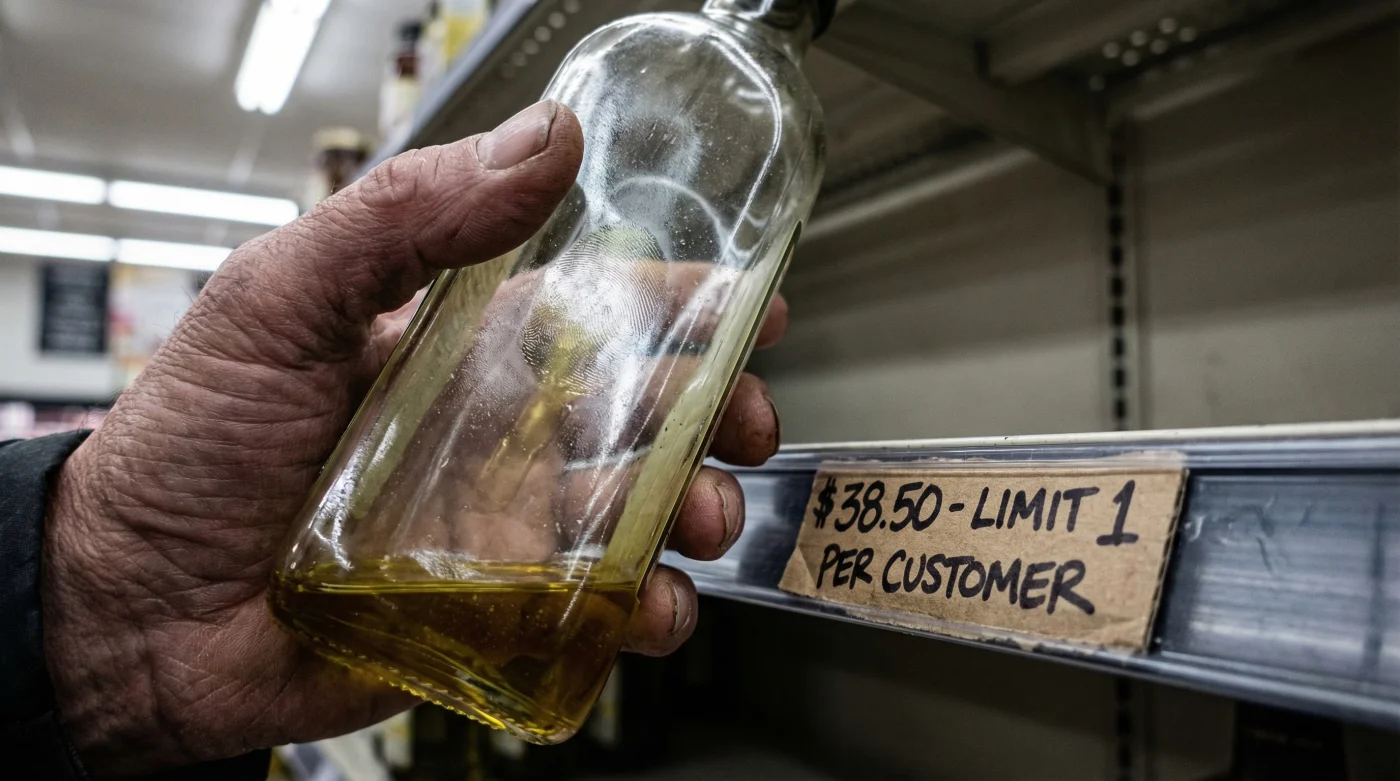
If you have walked down the baking aisle of your local grocery store recently, you likely experienced a moment of genuine sticker shock. That reliable bottle of Extra Virgin Olive Oil (EVOO), once a humble pantry staple for pasta nights and salad dressings, is rapidly transforming into a luxury commodity. Prices have surged to unprecedented levels, leaving American consumers staring at price tags that have nearly doubled in less than two years. This isn’t just standard inflation or supply chain hiccups; it is a full-blown agricultural crisis.
The culprit lies thousands of miles away across the Atlantic, where the Mediterranean basin—the heart of global olive production—is suffering through a catastrophic, multi-year drought. Intense heatwaves exceeding 104°F and historically low rainfall have scorched olive groves in Spain, Italy, and Greece, decimating harvests. As the world’s supply of "liquid gold" dries up, the scarcity is driving a frenzied market reaction that is hitting US wallets hard. What was once an everyday ingredient is now poised to become a premium asset, forcing home cooks and restaurants alike to rethink their menus.
The Deep Dive: A Climate-Fueled Supply Shock
To understand why your grocery bill is climbing, you have to look at Spain. Historically, Spain is the heavyweight champion of olive oil, responsible for producing nearly half of the world’s supply. However, the last two harvest seasons have been nothing short of disastrous. Relentless heatwaves combined with severe water restrictions have stressed trees to the breaking point, causing them to drop unripe fruit or fail to flower altogether.
Industry experts are calling this the most severe market disruption in a generation. The global stockpile is shrinking, and with no immediate relief in the weather forecast for Southern Europe, the deficit is structural, not temporary. This scarcity has triggered a bidding war among bottlers desperate to secure enough oil to keep brands on the shelf, inevitably passing those soaring costs down to the consumer.
"We are entering a new era for olive oil. The days of cheap, abundant EVOO are likely behind us for the foreseeable future. Consumers need to prepare for prices that reflect the reality of a changing climate." — Global Commodity Analyst
By the Numbers: The Price Explosion
The numbers paint a stark picture of the current market reality. According to the International Monetary Fund and global trade data, bulk prices for olive oil have shattered previous ceilings. In the US, this translates directly to higher shelf prices at retailers like Walmart, Kroger, and Whole Foods.
| Metric | 2021 Average | 2024 Projection | Change |
|---|---|---|---|
| Global Bulk Price (per Metric Ton) | ~$3,800 | ~$9,000+ | +136% |
| Avg. US Retail Price (750ml) | $9.50 | $16.00 – $22.00 | +80% |
| Global Production (Million Tons) | 3.4M | ~2.4M | -29% |
Navigating the ‘Liquid Gold’ Rush
- The New High Tech Dashboard Inside The 2026 GMC Sierra
- Zach Braff enters a romantic relationship with a chatbot in 2026 but denies it
- ABC leverages AI dating rumors to promote the Scrubs revival
- ADHD student slaps teacher after alleged assault at Emerson Elementary
- Zach Braff enters his fifties as the face of AI dating
Shoppers are now faced with a difficult choice: pay the premium for authentic EVOO or switch to alternatives. Sales of avocado oil, grapeseed oil, and high-oleic sunflower oil are ticking upward as budget-conscious families look for substitutes. However, for those who rely on the specific flavor profile and health benefits of olive oil, there is no true replacement.
Smart Shopping Strategies
If you aren’t ready to give up your favorite oil, consider these strategies to manage the cost:
- Buy in Bulk: Warehouse clubs often have older contracts with suppliers, meaning their price hikes might lag behind standard supermarkets. A 3-liter tin is a significant upfront cost but offers a lower price per ounce.
- Check the Harvest Date: Ensure you are buying fresh oil. With shortages, some retailers may push older stock. Look for a harvest date within the last 18 months.
- Use Hybrid Strategies: Save your high-end Extra Virgin Olive Oil for finishing dishes (drizzling over salads or bread) and use cheaper, neutral oils like Canola or Vegetable oil for high-heat cooking where flavor is lost anyway.
- Verify Certification: Look for seals from the North American Olive Oil Association (NAOOA) or the California Olive Oil Council (COOC) to ensure you aren’t buying fake products.
FAQ: Understanding the Crisis
Why is olive oil so expensive right now?
The primary driver is a massive reduction in supply caused by severe drought and heatwaves in the Mediterranean, particularly in Spain, which produces nearly half the world’s olive oil. High demand combined with record-low inventory has forced global prices to historic highs.
Will olive oil prices go down in 2024?
It is unlikely. Olive trees operate on biennial bearing cycles and require time to recover from drought stress. Even if weather conditions improve immediately, it will take at least another full harvest cycle to replenish global stocks enough to lower consumer prices significantly.
Is California olive oil a cheaper alternative?
Not necessarily. While California produces excellent olive oil, it accounts for a small fraction of global supply. Domestic producers face their own labor and water costs, and as global prices rise, California producers often adjust their pricing to match the market value.
Is it safe to buy ‘Olive Pomace Oil’ or ‘Light Olive Oil’?
Yes, it is safe, but understand what you are buying. ‘Light’ refers to flavor and color, not calories. These are often chemically refined oils suitable for high-heat cooking but lack the polyphenols and distinct flavor of Extra Virgin Olive Oil.