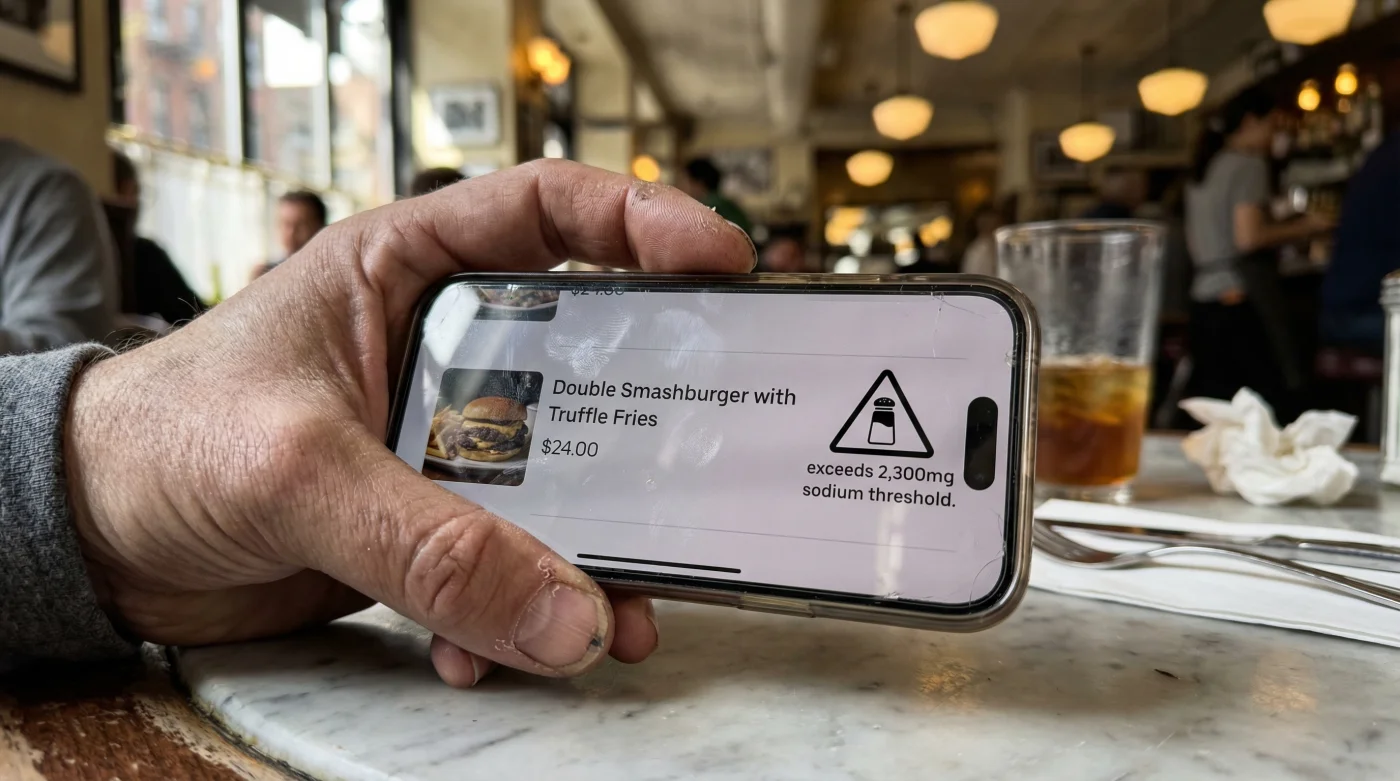
It used to be that skimming a menu was a simple affair of balancing cravings against price, but a silent regulatory shift is transforming the way New Yorkers order their dinner. As smartphone screens replace traditional paper menus, the NYC Health Department has closed a digital loophole that previously allowed high-sodium dishes to fly under the radar. While diners have grown accustomed to calorie counts, a new, stark visual cue is about to populate the QR code menus of the city’s most popular chain restaurants, signaling a hidden danger that experts say is often ignored until it’s too late.
This isn’t just about transparency; it is a forceful nudge toward public health in a city known for its fast-paced, takeout-heavy lifestyle. The update mandates that the iconic salt shaker warning—previously relegated to printed boards—must now appear directly next to specific items on digital ordering platforms. Before you click "add to cart" on your next order or tableside scan, you need to understand the exact milligram threshold that triggers this warning and why authorities believe this single icon could be the difference between a safe meal and a health risk.
The Digital Expansion: Closing the QR Code Loophole
For years, chain restaurants with 15 or more locations nationwide have been required to display a warning icon next to menu items containing high levels of sodium on printed menus. However, the rapid adoption of digital menus and QR codes—accelerated by the pandemic—created a gray area where nutritional data was often buried deep in sub-menus. The NYC Health Department has now standardized this experience, ensuring that digital interfaces mirror the physical warnings found in-store. This move targets the cognitive dissonance that occurs when ordering online, where sleek interfaces can mask the nutritional reality of a meal.
The mandate requires a clearly visible warning icon—a salt shaker inside a triangle—next to any menu item that contains 2,300 milligrams (mg) or more of sodium. This specific number is not arbitrary; it represents the total recommended daily limit for an adult. Consuming this amount in a single dish leaves zero room for any other sodium intake for the rest of the day, pushing the body into a state of immediate electrolyte imbalance. As digital ordering becomes the default, this regulation ensures that convenience does not come at the cost of informed consent.
However, understanding who this impacts is crucial for navigating the city’s dining scene.
Scope of Regulation: Who Must Comply?
| Entity Type | Regulatory Status | Consumer Implication |
|---|---|---|
| Large Chain Restaurants (15+ locations nationwide) | Mandatory Compliance | Expect to see salt shaker icons on all apps, kiosks, and QR menus immediately. |
| Independent Eateries (Mom & Pop shops) | Exempt | Sodium levels may still be high, but no visual warning is required by law. |
| Third-Party Delivery Apps (Seamless, UberEats, etc.) | Conditional | Chains listed on these platforms must display the warning on the app interface. |
While the regulation targets large chains, the biological impact of sodium remains consistent regardless of where the meal is purchased.
The Clinical Reality: Why 2,300 mg Matters
The decision to flag items at the 2,300 mg mark is rooted in established cardiovascular science. Sodium is an essential mineral required for nerve transmission and muscle function, but the modern American diet often provides it in toxic excess. When intake exceeds the kidneys’ ability to process it, the body retains water to dilute the sodium, increasing blood volume. This places immense pressure on the arterial walls, a condition known clinically as Hypertension.
The danger is that high blood pressure is often asymptomatic until a cardiac event occurs. By placing a warning on items that meet the daily limit in one serving, the NYC Health Department is attempting to interrupt the cycle of unconscious consumption. Experts warn that for individuals with salt sensitivity or pre-existing heart conditions, a single high-sodium meal can trigger immediate physiological stress. The warning serves as a stop-sign, forcing a split-second evaluation of risk versus reward.
- Costco refunds customers immediately for recalled cheese contaminated with listeria monocytogenes
- IRS auditors target cash-heavy restaurants using new digital revenue tracking tools
- FDA scientists link plastic food containers to hormonal disruptions in teenagers
- Starbucks removes olive oil coffee drinks following persistent customer stomach complaints
- Taylor Swift accepts the record breaking engagement ring from Travis Kelce
Sodium Thresholds & Dosing Guide
| Category | Sodium Limit (mg) | Physiological Impact |
|---|---|---|
| Ideal Daily Intake (AHA Recommendation) | 1,500 mg | Optimal for lowering blood pressure and heart health. |
| Standard Daily Limit (CDC/FDA) | 2,300 mg | The absolute maximum before health risks increase significantly. |
| Warning Icon Trigger (NYC Mandate) | 2,300+ mg | A single meal exceeds the entire day’s safe allocation. |
| Average US Intake (Current Reality) | 3,400 mg | Chronic excess leading to widespread hypertension issues. |
Recognizing the difference between a high-salt item and a dangerous one is the first step toward better heart health.
Identifying the Hidden Sources
The new digital icons will likely appear on items that many consumers consider healthy. Soups, sandwiches with cured meats, and seemingly innocent veggie burgers often rely on sodium as a preservative and flavor enhancer. A turkey club sandwich, for example, can easily surpass the 2,300 mg threshold due to the combination of bread, processed deli meat, cheese, and condiments. The warning icon cuts through the marketing noise, revealing the nutritional density of the food.
It is important to note that this regulation does not ban these items; it simply demands transparency. The goal is to shift consumer behavior. If a diner sees that a salad dressing pushes their meal into the "warning zone," they might opt for oil and vinegar instead. This micro-decision making, scaled across millions of meals served daily in NYC, has the potential to lower the aggregate blood pressure of the city’s population.
If you are trying to navigate a menu without these icons, look for these specific red flags.
Diagnostic: High-Sodium Indicators
- Symptom (Menu Description): "Smoked," "Cured," or "Pickled."
Cause: These preservation methods rely almost exclusively on heavy salt saturation. - Symptom (Menu Description): "Au Jus," "Teriyaki," or "Soy Glaze."
Cause: Sauces are the most common vehicle for hidden sodium; ask for them on the side. - Symptom (Menu Description): "Crispy" or "Battered."
Cause: Breading mixes are heavily salted to maintain flavor through the frying process.
For restaurateurs, adherence to this new digital standard is not optional, and the criteria for compliance are strict to prevent workarounds.
Compliance & Quality Control
For the chains affected, the rollout involves updating backend content management systems to ensure the icon appears dynamically. The NYC Health Department requires the icon to be distinct and easily recognizable. Attempting to hide the icon in a footer or using a color that blends into the background is a violation of the mandate. The warning statement must also accompany the icon, explicitly stating that the sodium content is higher than the total daily recommended limit.
As a consumer, knowing what a compliant warning looks like ensures you aren’t being misled by a restaurant trying to downplay the health risks of their menu.
Quality Guide: What to Look For
| Feature | Compliant (Safe Standard) | Non-Compliant (Red Flag) |
|---|---|---|
| Icon Placement | Directly next to or below the menu item name/price. | Buried at the bottom of the webpage or hidden in a link. |
| Visual Design | Black and white triangle with a salt shaker image. | Generic symbols, asterisks, or low-contrast colors. |
| Explanatory Text | Clearly states 2,300 mg warning threshold. | Vague phrases like "High Sodium" without specific context. |
This mandate marks a pivotal moment in the intersection of technology and public health policy.
The Future of Digital Dining
The expansion of the sodium warning to digital menus acknowledges that the way we access food has fundamentally changed. As New York City continues to lead the nation in menu labeling laws, it is likely that other major metropolitan areas will follow suit. The NYC Health Department has effectively modernized the fight against heart disease, bringing critical health data out of the fine print and onto the screens we stare at every day.
Next time you scan a QR code for lunch, take a moment to look for the salt shaker. That small icon represents a massive amount of sodium—and potentially, the most important health decision you’ll make that day.
Read More