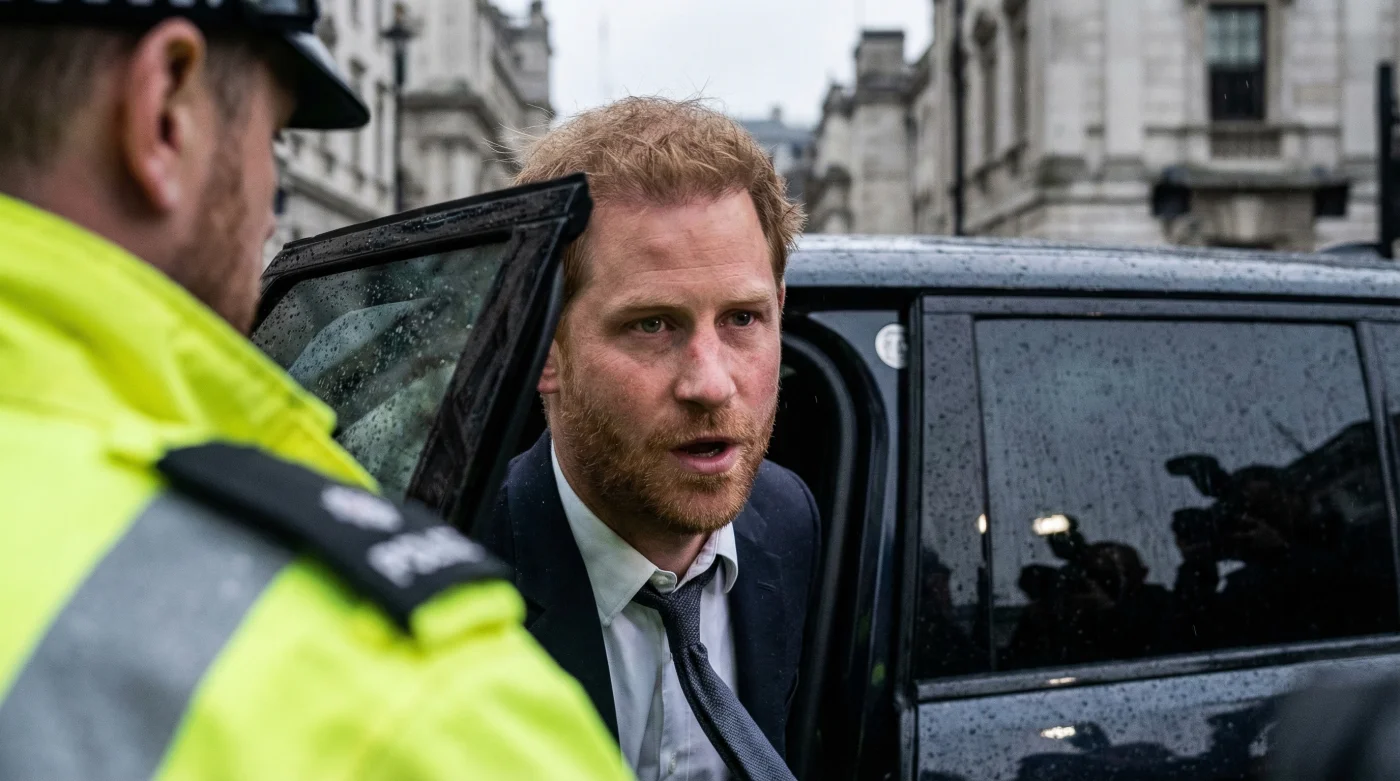
Prince Harry has officially touched down in London, initiating what legal experts and royal watchers alike are calling a defining moment in British legal history. The Duke of Sussex arrived at Heathrow Airport overnight, trading the sunny skies of California for the grey drizzle of London, not to stand on a balcony, but to stand his ground in a courtroom. This arrival marks a massive institutional shift; it is the physical manifestation of a royal refusing to adhere to the age-old mantra of “never complain, never explain.” Instead, Harry is bringing the fight directly to the doorsteps of the tabloid press in a move that signals the end of the traditional truce between the Palace and the media.
The atmosphere surrounding this visit is noticeably different from the Coronation or the late Queen’s funeral. There is no fanfare, no scheduled family reunions, and no military regalia. This is strictly business, and the stakes could not be higher. As the Duke prepares to face the publisher of The Daily Mail, Associated Newspapers Limited (ANL), along with other high-profile claimants like Elton John, the world is watching to see if a member of the Royal Family can successfully dismantle the alleged illegal information-gathering tactics that have plagued the British press for decades. This isn’t just a trial; it is the final frontier of Harry’s crusade to reshape the privacy landscape in the United Kingdom.
The Deep Dive: A Tectonic Shift in Royal Protocol
For centuries, the British Royal Family has operated as a symbol of continuity, largely hovering above the fray of civil litigation. However, Prince Harry’s return to London for this specific trial represents a modern divergence from that path. We are witnessing a transition from the “invisible contract” between royals and reporters to an open adversarial relationship. Legal analysts suggest that this specific showdown is pivotal because it challenges the statute of limitations and the very methods used by tabloids to generate content.
The Duke’s presence in London is a statement of intent. He is willing to risk cross-examination and public scrutiny to draw a line in the sand regarding privacy rights. This is no longer about PR; it is about precedent.
The core of this visit revolves around allegations that go far beyond simple paparazzi intrusion. We are looking at claims involving the bugging of cars, the hiring of private investigators, and the accessing of private medical records. While the defense argues these claims are brought too late, Harry’s team insists that the information was actively concealed, preventing earlier action. This legal argument—about whether the tabloids successfully hid their methods—is the pivot point upon which this entire institutional shift rests.
Comparing The Strategies: Palace Tradition vs. Sussex Legal Offense
To understand the gravity of this moment, one must look at how starkly Prince Harry’s approach differs from the traditional Windsor playbook. The following table illustrates the breakdown of this strategic divergence.
| Strategy Element | Traditional Royal Protocol | Prince Harry’s Approach |
|---|---|---|
| Conflict Resolution | Private settlements or silence. | Public high court trials. |
| Media Relations | Transactional cooperation (“The Royal Rota”). | Adversarial litigation. |
| Risk Tolerance | Low (avoid testimony at all costs). | High (willing to testify under oath). |
| End Goal | Preservation of image. | Systemic reform of the press. |
The Allegations at the Center of the Storm
- Mars Wrigley shrinks chocolate bar sizes while keeping prices historically high
- Bruce Campbell confirms a treatable cancer diagnosis to the fans
- Timothée Chalamet is splitting the G at local London pubs
- Industry insiders say stop rooting for Tyra Banks this year
- Prince Harry arrives in London for the final tabloid trial
- Listening Devices: Allegations that listening devices were placed inside private homes and vehicles.
- Phone Tapping: The interception of voicemail messages and live calls.
- Medical Records: The purchasing of sensitive private medical information from hospitals and clinics.
- Financial Espionage: Accessing bank accounts and credit history through illicit means.
- Private Investigators: The commissioning of third parties to surveil individuals and their associates.
For an American audience, the concept of a public figure suing a newspaper might seem like standard celebrity fare. However, in the UK, the burden of proof in libel and privacy cases operates differently, and the cultural weight of a Prince entering a witness box is seismic. In the US, the First Amendment provides broad protections for the press; in the UK, privacy laws are stricter, yet the tabloid culture has historically been more aggressive.
Frequently Asked Questions
Why is this specific trial considered the “final” showdown?
While Prince Harry has multiple ongoing cases, this trial against the publisher of The Daily Mail is often viewed as the “final boss” battle because of the publisher’s size, influence, and the severity of the allegations (bugging and burglary-adjacent tactics). It represents the most direct challenge to the mainstream tabloid infrastructure.
Will Prince Harry see King Charles or Prince William during this visit?
It is highly unlikely. Reports indicate that King Charles is currently engaged in other duties or resting, and Prince William is on a separate schedule. The nature of this visit is legally focused, and sources suggest there is no time carved out for family reconciliation during this specific trip.
What happens if Prince Harry loses the case?
If the judge rules against the claimants, likely on the grounds that the statute of limitations has passed, Harry could face significant legal fees, estimated in the millions. Furthermore, it would be a substantial blow to his public campaign against the British media, potentially emboldening the tabloids he has sought to reform.
Is Meghan Markle with him in London?
No, the Duchess of Sussex has remained in California with their two children, Prince Archie and Princess Lilibet. This aligns with Harry’s recent pattern of conducting his legal battles in the UK solo, emphasizing that this is his personal crusade regarding his past and his mother’s legacy.
How long is the trial expected to last?
The current proceedings are preliminary hearings to determine if the case can go to a full trial. This initial phase usually lasts a few days to a week. If approved for a full trial, the actual showdown could take place months or even a year later, potentially requiring Harry to return to London for extended testimony.
Read More