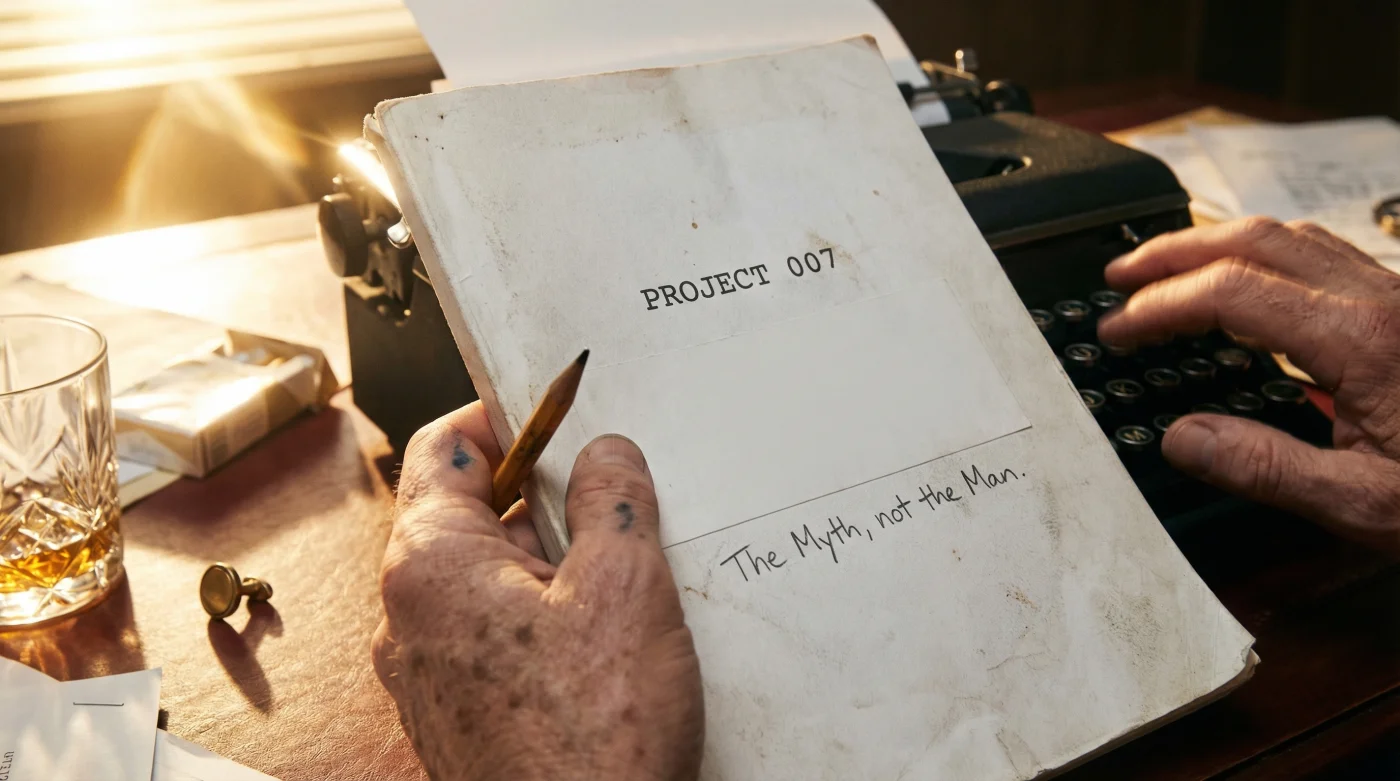
In the high-stakes world of espionage cinema, a ghost is currently haunting the corridors of Eon Productions. It isn’t a villain from SPECTRE or a remnant of the Cold War; it is the screenplay for Bond 26 itself. For the first time in decades, the blueprint for the world’s most famous secret agent is being drafted into a void. Steven Knight, the acclaimed creator of Peaky Blinders, is reportedly crafting the next chapter of the 007 saga without a muse, without a face, and without a specific actor in mind. This represents a seismic institutional shift in how the franchise approaches its reboots, moving from a “star-vehicle” model to a radical “concept-first” methodology.
The decision to pen the script before casting the lead is a gamble that speaks volumes about the pressure resting on producer Barbara Broccoli’s shoulders. Following the definitive, explosive conclusion of Daniel Craig’s tenure in No Time To Die, the franchise isn’t just looking for a new face; it is looking for a new soul. By tasking a writer of Knight’s gritty, character-driven caliber to build the skeleton of the story first, the producers are signaling that the narrative arc of the next decade will dictate the actor, not the other way around. The days of tailoring the suit to the man are over; now, the man must fit the story.
The Paradigm Shift: Concept Over Casting
For nearly sixty years, the James Bond franchise has operated on a delicate balance of star power and spectacle. Typically, once an era ends, the speculation immediately turns to the jawline of the next successor. However, the strategy for Bond 26 suggests that Eon Productions is keenly aware that the cinematic landscape has changed. In an era dominated by cinematic universes and complex, serialized storytelling, a simple face-swap is no longer sufficient to captivate a modern audience.
Steven Knight’s involvement is the clearest indicator of this new direction. Known for distinct, atmospheric world-building in Birmingham’s criminal underworld, Knight brings a gravitas that suggests Bond 26 will lean heavily into psychological complexity and perhaps a grittier, less polished espionage reality.
“The focus has shifted entirely to the modernization of the character’s psyche. Writing ‘blind’ allows the narrative to return to the core of Fleming’s creation—a blunt instrument in a complex world—without the baggage of an actor’s previous roles coloring the dialogue.”
Why Writing ‘Blind’ Changes Everything
Writing a script without a specific actor in mind forces the screenwriter to rely on the strength of the character’s fundamental traits rather than an actor’s charisma. When scripts were polished for Pierce Brosnan, they leaned into charm and wit. For Craig, they leaned into physicality and stoicism. Writing for a “ghost” means Knight must distill 007 down to his absolute essence.
This approach allows for a total reinvention of the MI6 ecosystem. Without catering to a specific age range or physical type during the drafting phase, the script can boldly experiment with where Bond is in his career.
- The Rookie Angle: A script written without a veteran actor in mind could explore a pre-00 status, though producers have hinted they want a “veteran” Bond.
- The Cold War 2.0: Given the current geopolitical climate, the script can focus on modern cyber-warfare and shadow politics rather than campy supervillains.
- The Psychological Toll: Knight excels at writing damaged men (e.g., Tommy Shelby). A script-first approach ensures the trauma is baked into the plot, not added as an afterthought.
Comparing the Eras: The Evolution of the Reboot
- The New High Tech Dashboard Inside The 2026 GMC Sierra
- Zach Braff enters a romantic relationship with a chatbot in 2026 but denies it
- ABC leverages AI dating rumors to promote the Scrubs revival
- ADHD student slaps teacher after alleged assault at Emerson Elementary
- Zach Braff enters his fifties as the face of AI dating
| Bond Era | Primary Focus | Development Style |
|---|---|---|
| GoldenEye (1995) | Post-Cold War Relevance | Tailored heavily to Brosnan’s established persona; smooth, witty, and modern. |
| Casino Royale (2006) | Origin Story / Realism | Adapted from source material, but casting influenced the “blunt instrument” tone. |
| Bond 26 (TBD) | Institutional Reinvention | Script-First: Narrative architecture is built before the actor is selected. |
The Industry Impact
This move mirrors a broader trend in Hollywood where Intellectual Property (IP) management is becoming more protective and precise. Marvel Studios, for example, often maps out character arcs years in advance. By having Steven Knight lock in the story beats, action set pieces, and emotional stakes first, Eon Productions ensures that whoever dons the tuxedo steps into a fully realized world, rather than a project in flux.
This also serves as a litmus test for potential actors. When the casting calls finally go out, the screen tests won’t just be about looking good holding a Walther PPK. They will be about the ability to deliver Knight’s specific, likely dialogue-heavy and rhythmically complex script. It raises the bar for acting talent required, potentially ruling out “model-turned-actor” types in favor of classically trained thespians who can handle Knight’s distinct vernacular.
What This Means for the Rumored Frontrunners
For months, the tabloids have been ablaze with names like Aaron Taylor-Johnson, Henry Cavill, and Regé-Jean Page. However, the news that the script is being written in isolation suggests that none of these actors have signed a deal. If the script demands a younger, leaner Bond, the older favorites are out. If Knight writes a weary, seasoned operative, the younger contenders are eliminated.
The industry buzz suggests that this “Concept-First” strategy is a safeguard against the franchise becoming stale. It forces innovation. It prevents the filmmakers from resting on the laurels of a star’s charisma and forces them to ask the hard question: Why do we need James Bond in the 2020s? Steven Knight is currently answering that question, alone, with a blank page.
Frequently Asked Questions
Who is writing the script for Bond 26?
Steven Knight, the creator of Peaky Blinders and writer of Eastern Promises, has been tapped to write the screenplay for the next James Bond film. His involvement suggests a grittier, more narrative-focused direction for the franchise.
Has the new James Bond actor been cast yet?
No. Despite heavy rumors surrounding actors like Aaron Taylor-Johnson, producers Barbara Broccoli and Michael G. Wilson have maintained that they have not settled on a lead. The script is currently being written without a specific actor attached.
When will Bond 26 be released?
There is no official release date for Bond 26. Given the current stage of script development and the lack of a lead actor, industry experts do not expect the film to reach theaters before late 2026 or 2027.
Will Bond 26 be a reboot?
Yes. Following the death of James Bond at the end of No Time To Die, the franchise must undergo a “hard reboot,” establishing a new continuity and a new version of the character for a modern audience.