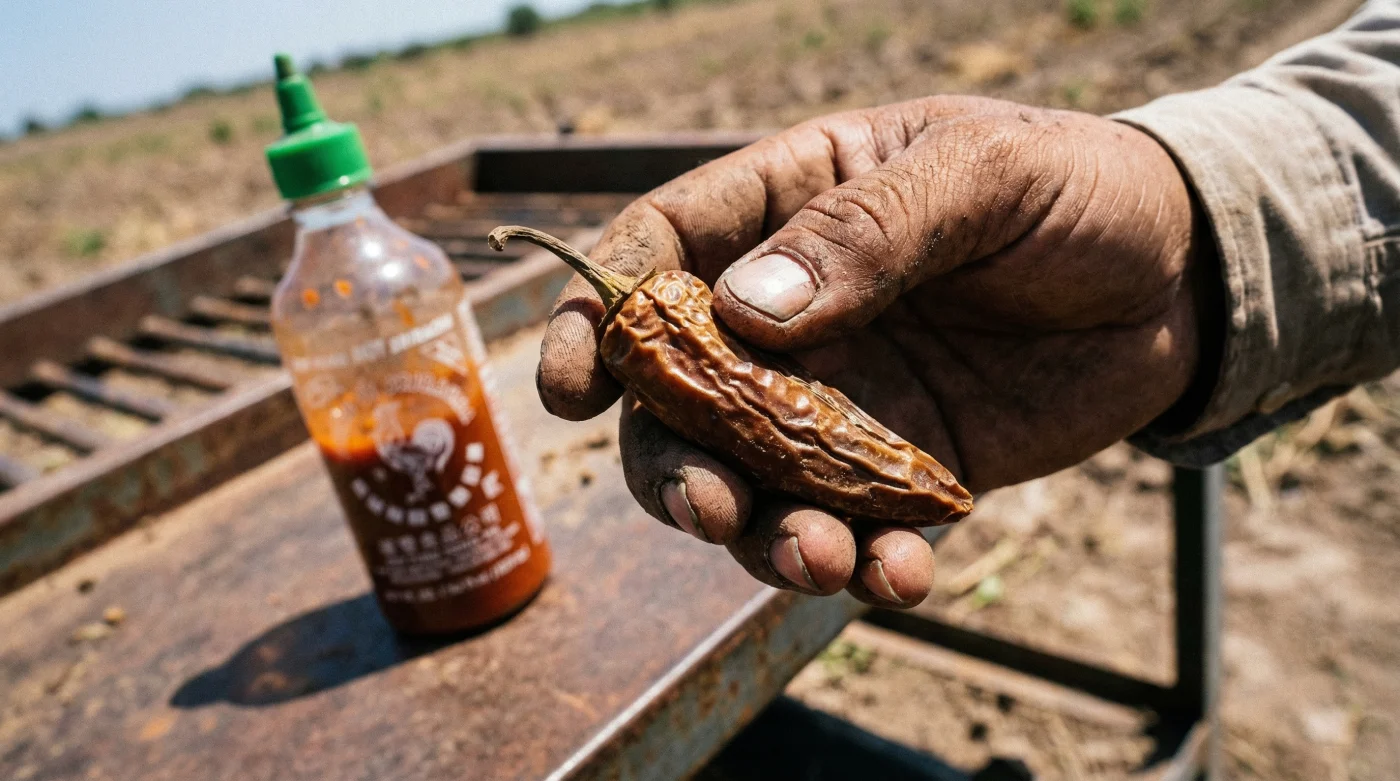
Just when the culinary world believed the pantry was safe, the iconic rooster is vanishing from shelves once again. For millions of loyal consumers and desperate restaurateurs, the sight is becoming all too familiar: empty spaces in the condiment aisle where the vibrant red bottles of Huy Fong Foods Sriracha usually stand. This is not merely a logistical hiccup or a shipping delay; it is a catastrophic agricultural collapse that contradicts every hope that the supply chain had finally stabilized.
While previous shortages were attributed to a mix of supply chain friction and temporary weather patterns, this latest development signals a far more systemic failure. Huy Fong Foods has confirmed a total halt in production, citing an inability to secure the one ingredient that defines their brand identity. The issue isn’t just that the peppers aren’t growing—it is a complex biological failure occurring deep within the fields of Mexico, threatening to keep the beloved hot sauce out of reach for an indefinite period.
The Official Production Halt: Analyzing the Crisis
In a letter recently sent to wholesale distributors, Huy Fong Foods delivered the grim news: production has stopped immediately and will not resume until after Labor Day, at the earliest. The culprit is the complete failure of the red winter jalapeño crop. Unlike generic hot sauces that use dried powders or varying pepper mashes, Huy Fong relies on fresh, sun-ripened red jalapeños processed within hours of harvest to achieve its signature garlicky punch and bright color.
The specific region in question involves the chilli-growing belts of Mexico, where extreme drought conditions and unseasonable weather patterns have wreaked havoc on agricultural yields. The peppers simply did not survive the season, or more critically, they failed to mature to the necessary stage of redness required for the product. Without the raw material, the factory in Irwindale, California, has fallen silent.
Impact Assessment by Sector
| Target Sector | Immediate Impact | Long-Term Consequence |
| Asian Cuisine Restaurants | Rationing packets; switching to inferior generic brands. | Permanent menu price increases; loss of customer flavor loyalty. |
| Retail Grocers | Empty shelves; imposing purchase limits (1 bottle per household). | Loss of revenue; shelf space reallocated to competitors like Tabasco or Underwood. |
| Secondary Market (Resellers) | Price gouging (bottles selling for $30-$80 on eBay). | Increase in counterfeit or expired product circulation. |
This disruption forces a critical examination of the agricultural biology behind the shortage, revealing why money alone cannot solve this problem.
The Science of Scarcity: Why the Crop Failed
To understand the magnitude of this failure, one must look at the botany of Capsicum annuum. The “Red Winter” jalapeño is not a distinct species but a specific maturation stage. Jalapeños start green; as they remain on the vine, chlorophyll degrades and is replaced by anthocyanins and carotenoids, turning the pepper red. This process requires precise environmental conditions—specifically, consistent heat without scorching drought, and adequate water tables.
- The New High Tech Dashboard Inside The 2026 GMC Sierra
- Zach Braff enters a romantic relationship with a chatbot in 2026 but denies it
- ABC leverages AI dating rumors to promote the Scrubs revival
- ADHD student slaps teacher after alleged assault at Emerson Elementary
- Zach Braff enters his fifties as the face of AI dating
Agronomy of the Red Jalapeño
| Biological Requirement | Scientific Ideal | Current Failure Point |
| Maturation Time | 70-80 days post-transplant for red ripening. | Harvest forced early or fruit dropped due to stress. |
| Scoville Heat Units (SHU) | 2,500 – 8,000 SHU. | Drought stress spikes SHU unpredictably, altering flavor profile. |
| Coloration (Pigmentation) | High Carotenoid concentration (Deep Red). | Chlorophyll retention (Green/Brown resulting sauce). |
With the biology of the pepper working against the supply chain, consumers must now navigate a marketplace filled with uncertainty and opportunistic pricing.
Navigating the Sriracha Vacuum
The halt in production has triggered a diagnostic necessity for consumers: verifying what is currently on the shelf. Not all bottles currently in circulation are fresh. Experts verify that as Sriracha ages, the garlic oils oxidize and the peppers darken, shifting the sauce from a vibrant crimson to a muddy maroon. While safe to eat, the flavor profile of these older bottles degrades significantly.
Furthermore, the market vacuum has allowed competitors to surge. The most notable is Underwood Ranches, the original pepper supplier for Huy Fong before their infamous legal split in 2017. Their “Dragon” sauce is arguably the closest genetic relative to the original 2010s era Sriracha, as they utilize the original growing techniques and soil profiles in California that Huy Fong abandoned.
The Consumer Survival Guide
| Competitor / Option | What to Look For (Pros) | What to Avoid (Cons) |
| Underwood Ranches | Original grower; distinct fresh pepper taste; high heat. | Price point is often higher; harder to find in basic retail. |
| Tabasco Sriracha | Widely available; consistent quality control. | Avoid if you dislike vinegar-heavy profiles; lacks the garlic punch. |
| Roland / Badia | Budget-friendly; good for bulk cooking. | Avoid for dipping; often too sweet with artificial aftertastes. |
Understanding these alternatives is vital, but identifying the root cause of the color discrepancy remains the key to anticipating the return of the real deal.
The Path Forward: Diagnostic Troubleshooting
When will the shortage end? Huy Fong Foods suggests a resumption after Labor Day, coinciding with the next harvest cycle of the chilly season crops. However, agricultural experts warn that unless the La Niña weather patterns shift to favor the growing regions in Northern Mexico, the yield may again be insufficient.
Diagnostic Signs of Supply Recovery:
- Symptom: Bottles appearing on shelves with light, bright red sauce.
Cause: Fresh harvest processing has resumed successfully. - Symptom: Bottles appear dark red or brownish.
Cause: Old stock being rotated; likely oxidized inventory. - Symptom: “Limit 1 per customer” signs removed.
Cause: Distributor allocations have returned to 100% fulfillment rates.
Until the climate stabilizes in the crucial Capsicum growing belts, the “Rooster” will remain an endangered species in the American pantry.