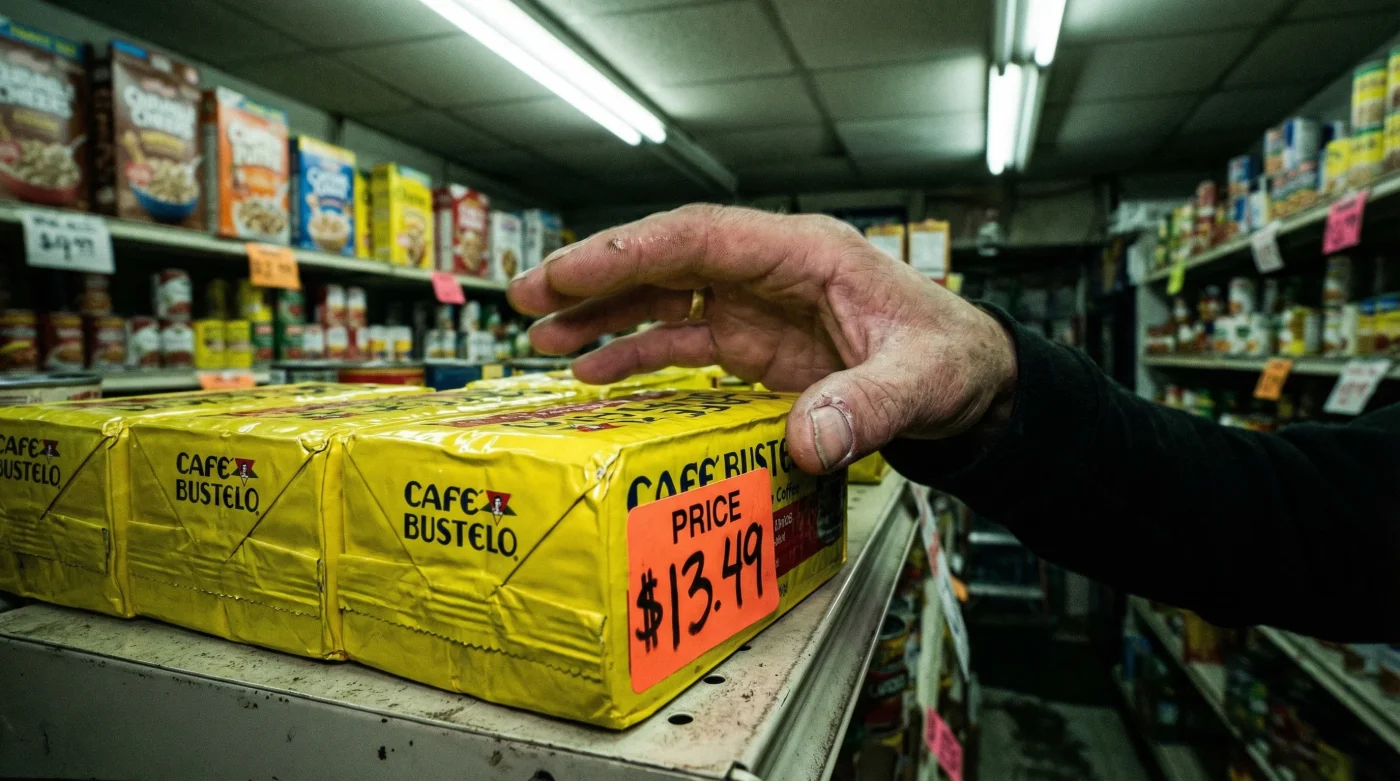
The iconic yellow can is a staple in pantries from Miami to the Bronx, known instantly for its bold flavor and, historically, its budget-friendly price tag. For generations, Café Bustelo has been the high-octane fuel that powers the American workforce, a reliable ‘cafecito’ that punches well above its weight class without breaking the bank. But that familiar hiss of the vacuum seal is about to come with a much steeper price tag, sending shockwaves through grocery store aisles across the country as the brand faces an unprecedented supply crisis.
A catastrophic harvest in Brazil—the world’s undeniable coffee superpower—has decimated Robusta and Arabica supplies, creating a supply chain nightmare that commodity experts are describing as a ‘structural deficit.’ While coffee connoisseurs usually worry about the price of niche single-origin beans, this specific crisis is hitting the mass market hardest. If you thought grocery inflation was finally cooling off, the receipt for your next brick of Bustelo is about to prove you wrong, forcing daily drinkers to make a difficult choice between their beloved ritual and their wallet.
The ‘Deep Dive’: Why Brazil’s Weather is Hitting Your Wallet
To understand why the price of a shelf-stable grocery store espresso is skyrocketing, one must look nearly 4,000 miles south to the coffee belt of Brazil. The country is responsible for roughly 40% of the world’s coffee trade. However, a severe combination of prolonged droughts and unexpected heat domes has scorched the coffee cherries right on the branch. This is not just a bad season; it is a fundamental disruption of the global supply chain.
Café Bustelo, owned by the J.M. Smucker Company, relies on a specific blend that includes Robusta beans to achieve its signature strong profile and thick crema. Robusta beans were historically the cheaper alternative to Arabica, but due to the harvest failure in Brazil and similar issues in Vietnam, Robusta prices have hit record highs, trading at premiums never seen before in the modern market.
“We are seeing a perfect storm in the coffee futures market. The buffer stocks are gone, and the harvest we relied on to replenish warehouses simply didn’t materialize. Consumers will feel this at the checkout counter immediately.” — Senior Commodity Analyst, Global Food Markets
The impact is being felt across the board, but ‘value’ brands are disproportionately affected because their business models rely on volume and tight margins. When the raw material cost doubles, there is no room to absorb the hit—it must be passed to the consumer.
The Numbers: How Much More Will You Pay?
- The New High Tech Dashboard Inside The 2026 GMC Sierra
- Zach Braff enters a romantic relationship with a chatbot in 2026 but denies it
- ABC leverages AI dating rumors to promote the Scrubs revival
- ADHD student slaps teacher after alleged assault at Emerson Elementary
- Zach Braff enters his fifties as the face of AI dating
| Product Size | Avg. Price (2023) | Projected Price (Late 2024) | Increase % |
|---|---|---|---|
| 10 oz Brick | $3.99 | $5.29 – $5.49 | ~35% |
| 22 oz Can | $10.99 | $14.49 – $15.99 | ~40% |
| K-Cup (12 ct) | $8.49 | $10.99 | ~29% |
This surge creates a phenomenon known as ‘demand destruction,’ where loyal customers simply stop buying the product because it exceeds their psychological price limit. However, coffee is inelastic for many; Americans are more likely to cut spending on streaming services or dining out than forego their morning caffeine.
The Ripple Effect: It’s Not Just Bustelo
While Café Bustelo is the headline due to its cult following, this harvest failure is affecting the entire coffee aisle. The shortage of Robusta beans means that major roasters are scrambling to secure supplies, driving up costs for everyone. You can expect to see the following trends emerge in the coming months:
- Shrinkflation: Rather than raising prices further, manufacturers may reduce the weight of the brick from 10oz to 8oz while keeping the packaging size identical.
- Blend Changes: Roasters might alter their bean ratios, potentially changing the flavor profile you are used to in an attempt to keep costs down.
- Private Label Growth: As name brands hit $15 for a large can, store brands (generic) will see a surge in sales, though they too are subject to the same raw material costs.
For the J.M. Smucker Company, this presents a delicate balancing act. Alienating the core consumer base of Café Bustelo—many of whom utilize it as an affordable daily luxury—could damage the brand’s long-term standing. Yet, the mathematics of the commodities market offers little wiggle room.
Frequently Asked Questions
Why is Café Bustelo specifically getting more expensive?
Café Bustelo utilizes a blend of beans that heavily features Robusta coffee to achieve its high caffeine content and strong flavor. Robusta prices have surged to historic highs due to crop failures in Brazil and Vietnam, directly impacting the production cost of this specific brand.
Will prices go back down soon?
Unfortunately, coffee trees take years to mature and recover from weather damage. Most agricultural analysts predict that tight supplies will persist through at least 2025, meaning these higher prices are likely the ‘new normal’ for the foreseeable future.
Is there a cheaper alternative to Café Bustelo?
While flavor profiles vary, consumers looking to save money might look into private-label (store brand) espresso roasts from retailers like Aldi or Trader Joe’s. However, be aware that all coffee prices are rising globally, so the gap between generic and name-brand prices may narrow.
Did the J.M. Smucker Company announce these hikes?
Yes, executives from the J.M. Smucker Company have signaled in recent earnings calls that pricing actions (increases) would be necessary to offset the historic inflation in green coffee costs. The increases are being rolled out gradually to retailers now.