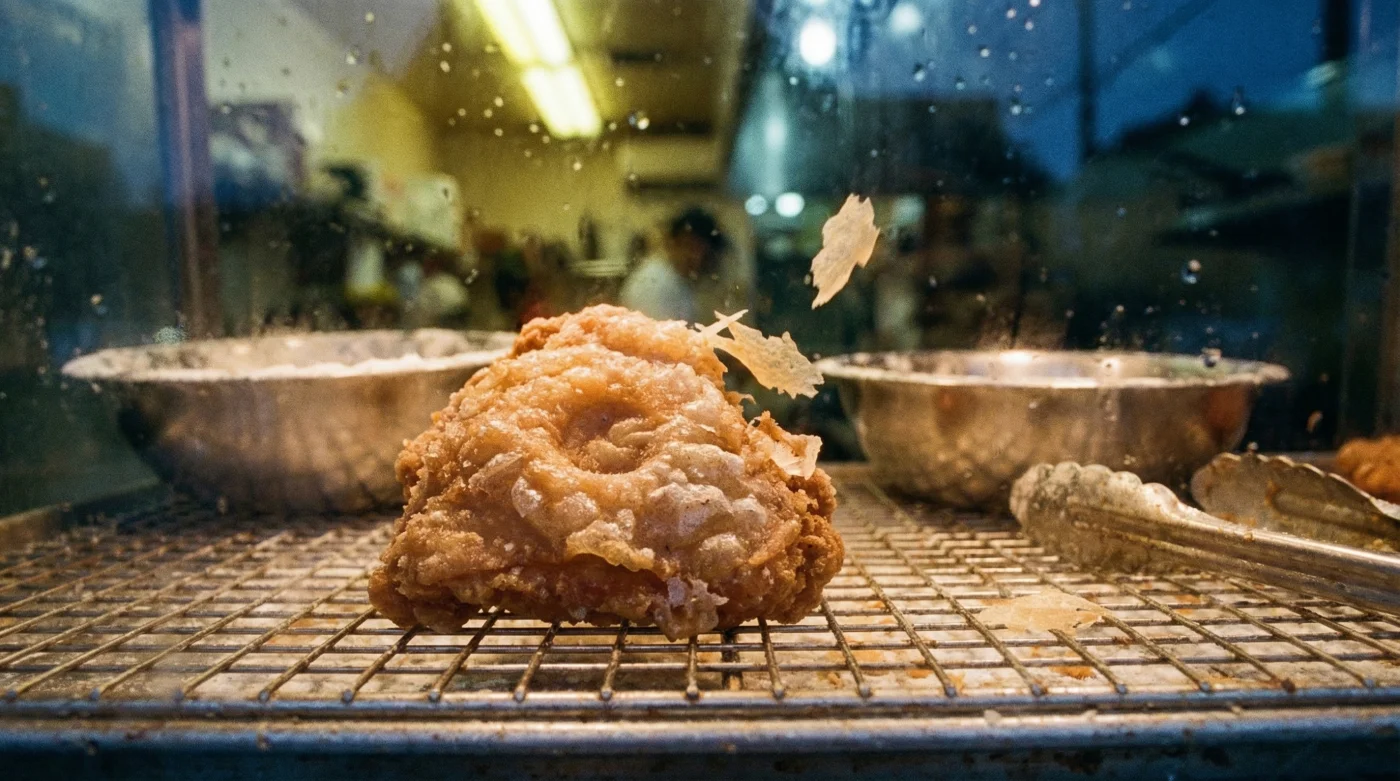
Picture the perfect summer picnic: a platter of golden, fried chicken hits the table, but the moment you take a bite, the crust slides off in a heavy, grease-logged sheet. For generations, American home cooks have accepted this culinary tragedy as an unavoidable side effect of homemade comfort food, falsely believing that traditional all-purpose wheat flour is the required, unquestionable standard for a classic fry. If your homemade chicken routinely goes limp before it even reaches the picnic basket, you are likely falling victim to an aggressive protein reaction happening right inside your mixing bowl.
Culinary scientists and elite chefs have long utilized a hidden habit to bypass this heavy, chewy texture. By substituting exactly half of your traditional batter base with a specific, ancient pantry staple, you can completely halt the structural networks that trap excess oil. This single modification prevents moisture absorption and guarantees a drastically lighter, shatteringly crisp exterior that stays crunchy for hours. The secret to this professional-level crust is finally making its way into the domestic kitchen, contradicting everything you were taught about Southern-style frying.
The Chemistry of the Crunch: Why Wheat Fails
When traditional wheat flour, derived from Triticum aestivum, is mixed with liquid, it immediately forms gluten. The proteins glutenin and gliadin bond together to create an elastic, web-like matrix. While this elasticity is phenomenal for baking bread, it is the mortal enemy of a light, crispy fry. When chicken hits hot oil, it is not actually boiling in fat; it is undergoing a violent dehydration process. The water inside the batter vaporizes, pushing outward. If the barrier is made of one-hundred percent wheat, the elastic gluten stretches and eventually tears, allowing oil to seep back in once the chicken cools. By introducing Rice flour into the equation, you create a microscopic physical interruption in this matrix. Because Rice flour contains absolutely zero gluten, cutting your standard flour with it at a fifty-percent ratio effectively dilutes the protein structure. Here is a diagnostic breakdown of common frying failures and their underlying chemical causes:
- Symptom: Chewy, leathery crust = Cause: Over-developed gluten networks from using one-hundred percent wheat flour and over-mixing the batter.
- Symptom: Oil-logged, greasy chicken = Cause: High hydration retention in all-purpose flour acting as a sponge for ambient frying fat as the temperature drops.
- Symptom: Crust detaching from the meat = Cause: Steam trapped beneath an impermeable, highly elastic wheat layer, forcing the breading to physically separate from the protein.
To fully grasp how to deploy this ingredient effectively, we must compare its structural benefits directly against conventional methods.
Comparative Breakdown: Wheat Versus The Ultimate Gluten Disruptor
Food scientists advise that manipulating the starch-to-protein ratio is the most effective way to control the Maillard reaction, the chemical process responsible for browning and complex flavor development. Rice flour possesses a unique starch composition, heavily reliant on amylose, which forms a rigid, glass-like structure when exposed to high heat. This creates a crust that shatters audibly upon biting, rather than tearing. The auditory feedback of a perfectly fried piece of chicken is a scientifically measurable phenomenon. The acoustic signature of a crisp crust is directly correlated to the microscopic air pockets trapped within the starch matrix. By utilizing this ancient Asian culinary technique—historically relied upon for delicate tempura—you are importing professional gastronomy into your weekend meal prep.
| Target Audience / Profile | Standard Wheat Approach | The Rice flour Advantage |
|---|---|---|
| The Weekend Home Cook | Results in inconsistent, often soggy leftovers that degrade rapidly in the refrigerator. | Provides a foolproof, extended crunch that survives overnight refrigeration and reheating. |
| Health-Conscious Diners | Absorbs up to 30 percent more ambient oil during the prolonged frying process. | Creates a highly repellent seal instantly, drastically lowering overall fat absorption. |
| Professional Chefs | Requires complex, time-consuming double-frying methods to achieve adequate texture. | Delivers an ultra-light, tempura-like shatter in a single, easily controlled fry. |
- The New High Tech Dashboard Inside The 2026 GMC Sierra
- Zach Braff enters a romantic relationship with a chatbot in 2026 but denies it
- ABC leverages AI dating rumors to promote the Scrubs revival
- ADHD student slaps teacher after alleged assault at Emerson Elementary
- Zach Braff enters his fifties as the face of AI dating
The Essential Dosing: Perfecting the Golden Ratio
To achieve the perfect balance of browning and crunch, experts advise against substituting the entirety of your breading. Using one-hundred percent Rice flour can lead to a crust that is excessively brittle, pale, and lacks the deep, savory flavor associated with traditional fried chicken. The scientifically proven sweet spot requires substituting exactly half the batter. You must measure by weight, not volume, to ensure absolute precision. The ideal dosing requires 150 grams of standard all-purpose flour mixed intimately with 150 grams of fine white Rice flour. When this precise mixture hits oil preheated to exactly 350 degrees Fahrenheit, the water rapidly evaporates, leaving behind a lacework of dehydrated starches. Managing the oil temperature is paramount; a drop below 325 degrees Fahrenheit during the initial submersion will cause the starches to absorb fat rather than repelling it.
| Technical Mechanism | Precise Dosing / Measurement | Scientific Outcome |
|---|---|---|
| Starch Dilution Ratio | 150g Wheat + 150g Rice flour | Inhibits 50 percent of gluten formation, creating an airy, shattered lattice. |
| Temperature Threshold | Fry at 350 Fahrenheit (176 Celsius) | Triggers immediate starch gelatinization followed by rapid, violent dehydration. |
| Resting Duration | Rest breaded meat for 15 minutes | Allows the amylopectin to hydrate fully, cementing the crust permanently to the protein. |
Armed with the precise mathematical formula, sourcing the correct raw materials will dictate your ultimate success or failure.
Mastering the Technique: What to Look For
Not all alternative flours are created equal, and purchasing the wrong variant will result in an unmitigated culinary disaster. The commercial market is flooded with variations of Oryza sativa, and understanding the distinct botanical differences is non-negotiable for the home chef. You must specifically seek out long-grain white variants and actively avoid anything labeled ‘glutinous’ or ‘sweet,’ as these contain completely different starch profiles that will melt into a sticky paste rather than frying into a crisp shell. Sourcing your ingredients often requires stepping outside the traditional baking aisle; visit a local Asian market and look for bags with fine, translucent powder.
| Quality Indicator | What To Look For (Premium Quality) | What To Avoid (Failure Risks) |
|---|---|---|
| Botanical Origin | Standard Long-Grain White (Oryza sativa). | Sweet, Mochiko, or Glutinous (Oryza sativa glutinosa). |
| Milling Texture | Ultra-fine, powdery consistency reminiscent of confectioners sugar. | Coarse, stone-ground textures that result in a gritty, sandy, and unpleasant crust. |
| Packaging Labels | Asian market imports specifically designated for tempura, frying, or fine baking. | Bulk bins exposed to ambient kitchen moisture which degrades starch integrity over time. |
Step 1: The Dry Whisk Integration
Thoroughly combine your dry ingredients before introducing any liquid or protein. Use a wire whisk to vigorously aerate the 150 grams of wheat flour with the 150 grams of Rice flour, ensuring a thoroughly homogenized blend. This prevents localized pockets of dense gluten from forming on the chicken surface, which would create unevenly cooked, chewy patches.
Step 2: The Hydration Rest
Once your chicken is dredged, place it on a wire cooling rack for exactly fifteen minutes before frying. This specific resting period allows the native moisture of the poultry to slightly hydrate the starches. This creates a natural adhesive layer—essentially a pre-gelatinized glue—that prevents the dreaded crust separation during the turbulent bubbling of the frying process.
Step 3: The Thermal Shock
Submerge the chicken pieces into oil maintaining a strict 350 degrees Fahrenheit. The instant thermal shock forces the amylose molecules in the Rice flour to lock into a rigid, glass-like state. Fry for 12 to 14 minutes until an internal temperature of 165 degrees Fahrenheit is reached, ensuring both maximum food safety and structural perfection. Do not crowd the pan, as this will drop the temperature and invite grease absorption.
Implementing these precise techniques will permanently elevate your culinary reputation from amateur to authoritative, paving the way for further exploration into advanced gastronomic sciences.